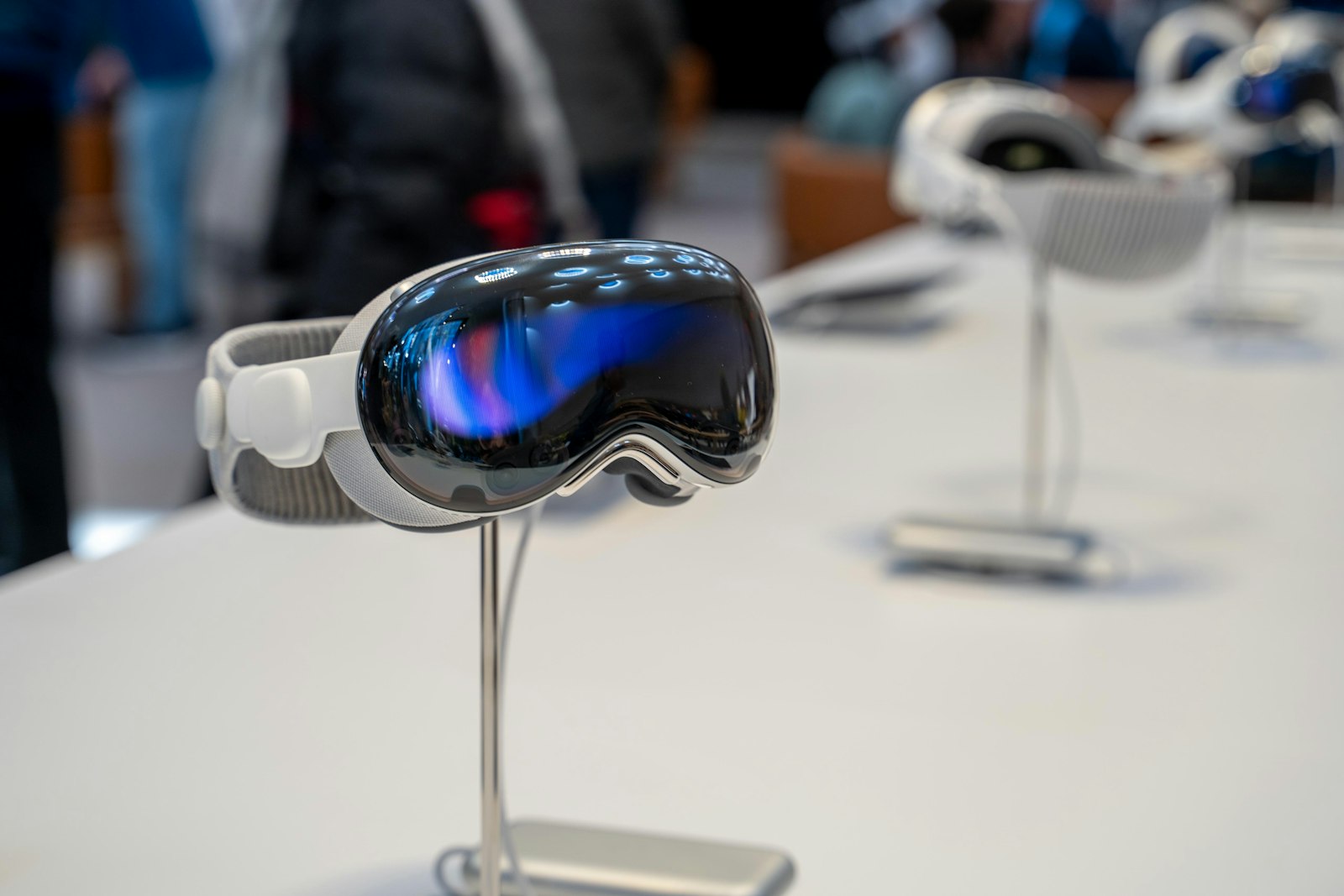
Roméo A. / Unsplash — contextual photograph of Apple Vision Pro
Apple Cuts Vision Team Jobs as Its Headset Strategy Loses Momentum
AppleInsider reports at least 60 Vision-related layoffs, while a later Bloomberg report cited by MacRumors puts cuts across Vision teams at about 100. Apple has not announced a product cancellation; the evidence points to a narrower, slower headset roadmap and a shift toward glasses.
AppleInsider reported on August 20 that Apple had laid off at least 60 employees tied to its Vision work. Apple has not confirmed that figure or described the change as a product cancellation.
A report, a number, and a silence
AppleInsider reported on August 20, citing its own sources, that Apple "has just laid off an entire team dedicated to VR development." At least 60 employees tied to the company's Vision work are said to be affected. Apple has not commented, which is consistent with its habits: the company almost never announces small-scale layoffs, and staffing changes of this size usually surface exactly this way, through reporting rather than press releases.
The direction matters more than the precise number. In March 2025, Bloomberg's Mark Gurman reported that Apple had dissolved the Vision Products Group — the dedicated organization that designed both the headset and its software — and redistributed its members across the company's larger hardware and software divisions, while group leader Mike Rockwell was reassigned to rebuild Siri. That reorganization moved people to other projects. The August cuts, as reported, remove them from the company. A redeployment keeps expertise available for a future product; a layoff signals that no near-term product needs it.
Thirty months from moonshot to maintenance
The Vision Pro was introduced at WWDC in June 2023 as Apple's first new platform since the Apple Watch, and it reached American stores in February 2024 at $3,499. Apple framed it as the beginning of spatial computing, a term the company chose precisely to avoid the gaming connotations of virtual reality.
The hardware story since then has been short. An M5 refresh arrived in October 2025, bringing roughly 10 percent more rendered pixels and refresh rates up to 120Hz at an unchanged price. Then, in June 2026, the price rose to $3,699 as the industry-wide memory shortage pushed up costs across the Mac, iPad, Apple TV and HomePod lines. For a product whose central obstacle had always been its price, the memory crunch moved the number in exactly the wrong direction.
That trajectory inverts the pattern of Apple's previous new categories. The iPod launched at $399 and got cheaper and smaller until it was everywhere; the Apple Watch shed its $10,000 gold flagship after one generation and consolidated around accessible models. The Vision Pro is the rare Apple product that became more expensive as it aged, without a cheaper sibling to absorb the demand it could not serve.
The successors that quietly disappeared
The layoffs land on ground that had already shifted. In June, analyst Ming-Chi Kuo reported that John Ternus — then hardware chief, now preparing to succeed Tim Cook as chief executive — had signed off on cancelling both a second-generation Vision Pro and the lighter, cheaper model known internally as "Vision Air." In July, the Korean outlet The Elec reported that Apple had ended development of the display intended for that cheaper headset. Gurman does not expect Apple to ship another headset before late 2028 at the earliest.
Each of those decisions was individually deniable as routine portfolio management. Together with a layoff of the remaining VR team, they describe a program in wind-down: no next flagship, no affordable variant, no dedicated organization, and now fewer people.
Why glasses won the argument
Apple's wearable ambitions have not shrunk; they have changed shape. The company's first smart glasses are expected to be unveiled at WWDC 2027 and to ship later that year, built around cameras, Siri and Visual Intelligence rather than an immersive display. Apple reportedly delayed the unveiling from this year while it rethinks the privacy questions that camera glasses raise.
The market logic is visible from the outside. Meta sells its Quest headsets at a fraction of the Vision Pro's price and still treats them as a niche business, while its camera-equipped Ray-Ban glasses have become the surprise success of the wearables market. Consumers, so far, have chosen light and cheap over immersive and expensive. Apple's pivot follows that verdict rather than contesting it.
What Vision Pro owners actually keep
The platform is not being switched off. visionOS 27 is in beta with Siri AI among its headline additions, and Apple senior director Steve Sinclair said in June that spatial computing remains in its "early innings," pointing to consumer and enterprise capabilities as evidence of continued investment. Ternus himself called the Vision Pro an "extraordinary product" in April, citing its uses in business and medicine.
Apple has maintained software support for slow-selling hardware for years before — the iPod touch survived long after the iPod era ended. Current owners should expect updates to continue. Prospective buyers face a different calculation: $3,699 buys a capable device whose next hardware generation is, according to Gurman's reporting, at least two years away.
Conclusion
Companies rarely declare a product dead, and Apple insists it remains invested in spatial computing. Its actions since 2025 — a dissolved team, two cancelled successors, an abandoned display project, and now layoffs — tell a more precise story: the Vision Pro's ideas will live on, but in a lighter product on a longer timeline. Whether the headset is remembered as a costly detour or as the research platform that made Apple's glasses possible will be decided in 2027, by a product that weighs a fraction as much and asks far less of its buyer.
Sources: AppleInsider — Layoffs in Apple's Vision Products Group · MacRumors — Apple Reportedly Lays Off 60 Vision Products Group Employees · 9to5Mac — Apple reportedly lays off 60 Vision employees amid shifting priorities