Apple’s smart-glasses plan now points to WWDC 2027
Two reports put Apple’s first smart glasses on a possible WWDC 2027 path, with privacy engineering at the center and no public confirmation from Apple.
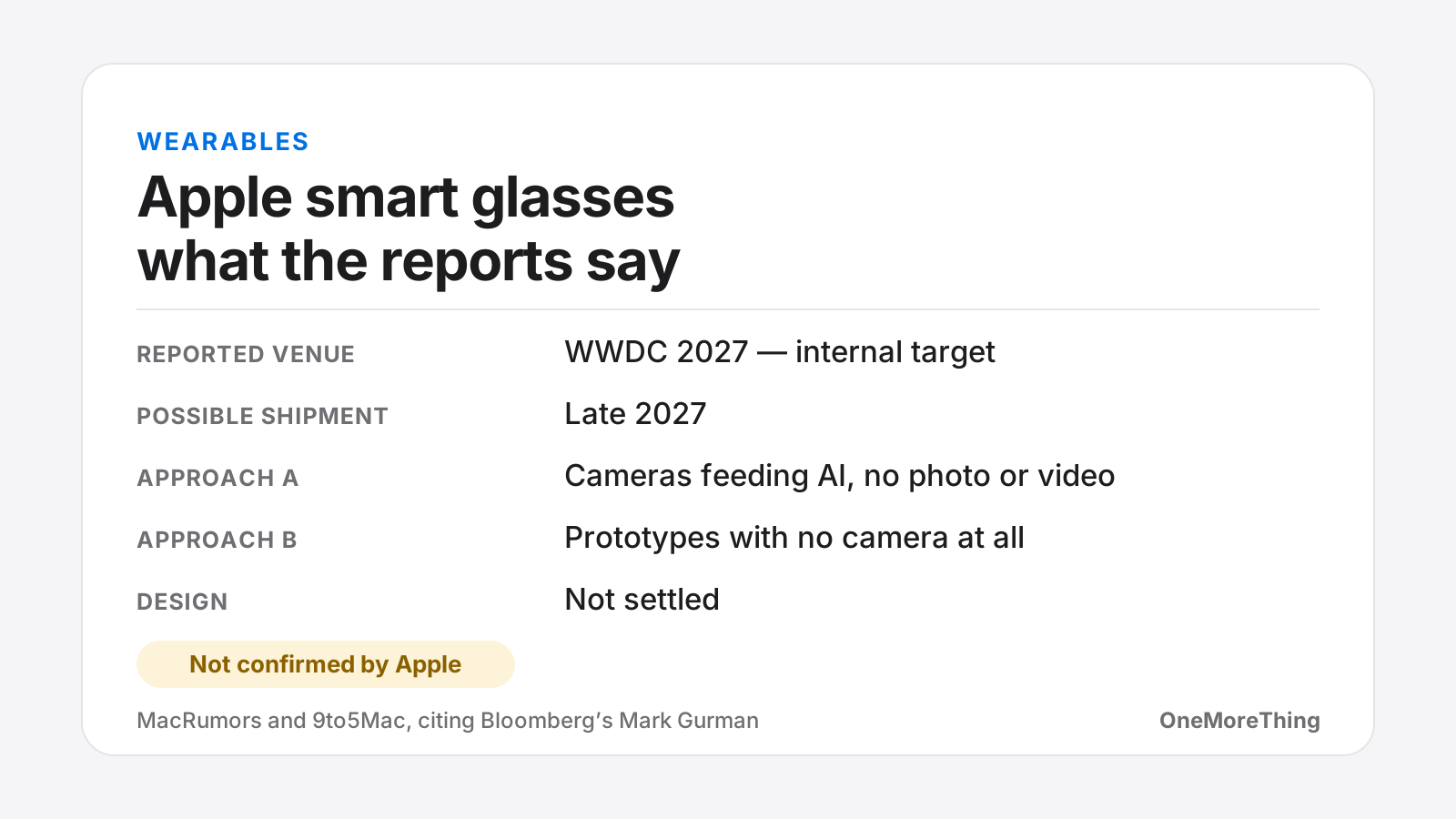
Apple’s first smart glasses may be heading for a WWDC 2027 unveiling, according to separate reports from MacRumors and 9to5Mac citing Bloomberg’s Mark Gurman. The reports describe an internal target, not a product announcement: Apple has not confirmed the glasses, their date, or their specifications.
The reported plan puts privacy at the center of the product brief. Apple is said to be testing several approaches, including glasses with cameras that would feed visual information to AI without recording photos or video, and prototypes with no camera system at all. The final design remains unsettled.
The timing would make WWDC a developer preview rather than a conventional retail launch. That would give Apple time to explain the software model and let developers prepare integrations before a possible late-2027 shipment. It would also make privacy a practical product question: a status light may reassure the wearer, but people nearby need to understand when the glasses can see or hear them.
The idea of Apple-branded glasses has circulated for the better part of a decade, and Vision Pro made the long-term direction explicit: the headset has been widely read as a first step toward lighter head-worn devices rather than an end state. Seen against that history, the notable part of the new reports is not that Apple is working on glasses — that has been assumed for years — but that the project now reportedly has a specific venue and a rough window attached to it.
A WWDC unveiling would also fit a pattern Apple has used before. Vision Pro was itself announced at the developer conference months before anyone could buy one, precisely because a new device category lives or dies on third-party software. Glasses would raise the same chicken-and-egg problem in a sharper form: the display area, input model and battery budget are all far more constrained than on a headset, so developers would need time, and clear guidelines, to work out what a useful glasses app even looks like.
The privacy focus is not a marketing flourish; it is a response to the category’s founding trauma. Camera-equipped eyewear has faced bystander-consent objections since the earliest attempts at the category, and the discomfort has never fully gone away: a phone held up to record is visible, while glasses that might be recording are not. Any company shipping consumer glasses has to answer for the people in front of the lens, not only the person wearing it.
That is what makes the reported spread of prototypes interesting. A camera that feeds visual information to AI without storing photos or video is an attempt to keep the intelligence while discarding the surveillance; a camera-free design goes further still, trading capability for social acceptability. Which trade Apple ultimately picks would shape the product far more than its industrial design, because it determines what the glasses can actually do — navigation, object recognition and scene understanding all depend on the device being able to see.
It is also worth remembering how reported internal targets behave. Timelines of this kind describe where a project sits today, not a commitment, and Apple has a long record of letting hardware slip until it meets internal standards. A WWDC 2027 target implies engineering confidence, not a shipping promise, and the distance between those two things is where projects like this are historically won, delayed or quietly rethought.
For developers, the sensible preparation is indirect: the frameworks Apple has built around Vision Pro — spatial interfaces, glanceable information, hands-free input — are the most plausible foundation for whatever eventually runs on glasses, so investment there is unlikely to be wasted. For everyone else, the report is a signal about direction, not a product to wait for.
For now, the useful conclusion is narrower than the headline. Apple appears to be exploring privacy-led smart glasses, but the hardware, camera policy, launch date and commercial availability are all unconfirmed. Any timeline should therefore be treated as a report to watch, not a buying plan.