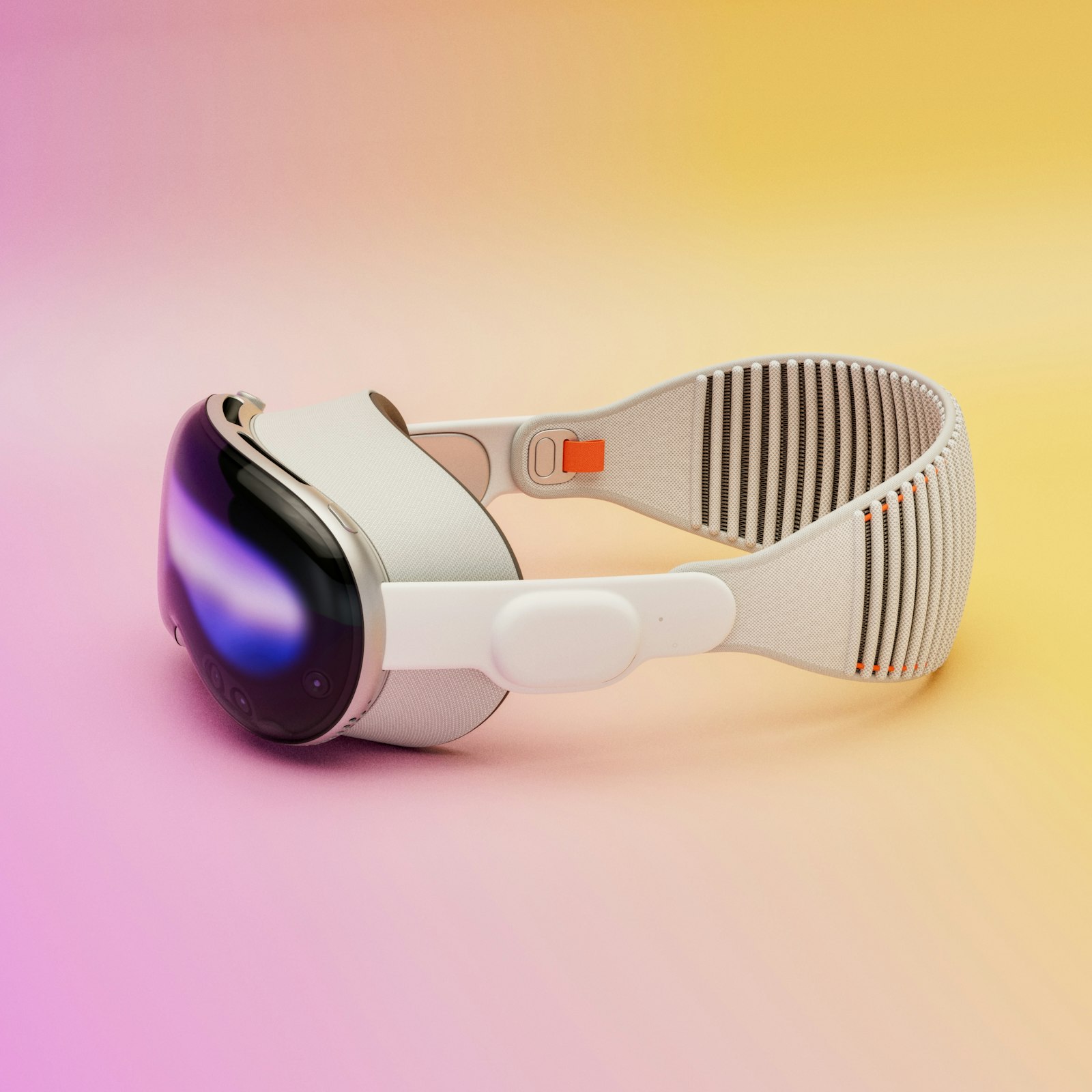
Apple's Vision Pro represents the company's bold bet on spatial computing as the next major computing paradigm. Despite slower-than-anticipated consumer adoption, Apple continues refining the device with performance improvements and features that enhance the user experience for early adopters and emerging use cases in professional and creative domains.
That bet arrives after more than a decade of false starts elsewhere. Facebook bought Oculus in 2014, HTC and Valve shipped the Vive in 2016, Microsoft's HoloLens retreated into enterprise contracts, and Magic Leap abandoned the consumer market after raising billions against it. Apple entered late, at the top of the price range, and carrying the highest expectations.
The M5 chip upgrade brings measurable improvements to Vision Pro. Apple says it renders 10 percent more pixels on the same displays than the previous, M2-based model, producing sharper images and crisper text. The chip itself carries a 10-core CPU, a 10-core GPU with a Neural Accelerator in each core, and a 16-core Neural Engine, alongside 16GB of memory; Apple credits that combination with AI features running up to 50 percent faster than before. The M5 also adds hardware-accelerated ray tracing and mesh shading, capabilities the M2 headset never had. The R1 chip that handles sensor input is unchanged.
The refresh rate is the other headline. Vision Pro can now ramp up to 120Hz, up from a previous ceiling of 100Hz — not the 60Hz of a typical desktop monitor. Apple frames the benefit as reduced motion blur and a smoother Mac Virtual Display rather than as a fix for motion sickness, and it has published no comfort data. Battery life also improves modestly, from up to 2.5 hours of video playback to up to three.
The Dual Knit Band addresses comfort concerns that hindered broader Vision Pro adoption. It replaces the Solo Knit Band and Dual Loop with a single knitted piece: one strap over the top of the head, one across the back, with tungsten inserts in the lower strap acting as a counterweight. It comes in three sizes, is sold separately for $99, and works with the previous-generation headset too. The tethered external battery, however, remains.
visionOS 26.4 introduces foveated streaming, which uses the headset's eye tracking to stream rendered content at full quality only in the region a wearer is actually looking at. Apple exposes a rough gaze region to developers through a host-agnostic API, with NVIDIA CloudXR among the first integrations; the effect is that a PC or cloud workstation can deliver 4K RTX-rendered content wirelessly without saturating the connection. The update entered beta on February 16, 2026 and has not yet been released to all users.
Foveated rendering itself is not new. Eye-tracked rendering has been a research staple for years and had already shipped in earlier headsets as a way of spending a fixed graphics budget only where the eye can resolve detail. What changes when the same idea is applied to streaming is the location of the work: the frame is rendered elsewhere, and the network rather than the headset's own silicon becomes the limiting factor.
Consumer demand has fallen short. Apple does not disclose Vision Pro unit sales, so the available numbers are estimates: IDC put 2024 shipments at roughly 390,000 units and expected only about 45,000 in the 2025 holiday quarter, and MacRumors reported in January 2026 that the M5 refresh had made little difference to that trajectory. The headset still starts at $3,499. Rather than abandoning spatial computing, Apple appears to be shifting emphasis toward professional and creative applications where the capabilities are easier to justify at that price.
Apple has been in this position before. The Apple Watch launched in 2015 with a broad and slightly unfocused pitch — part fashion accessory, part notification screen — sold modestly against expectations, and only found its market once successive generations narrowed the story to health and fitness. New Apple categories have historically needed several years, at least one repositioning, and usually a lower entry price before they reach volume.
Enterprise applications for Vision Pro are expanding, with adoption in medical training, architectural visualization, product design, and collaborative remote work scenarios. Professional users appreciate Vision Pro's capabilities for complex spatial visualization and find the investment justifiable for specialized applications.
Apple's commitment to Vision Pro refinement despite consumer market challenges demonstrates the company's long-term perspective on technological paradigm shifts. The company recognizes that spatial computing will eventually become mainstream, and maintaining a leadership position requires continued innovation and refinement even during early adoption phases.
Developer support remains strong, with increasingly sophisticated applications emerging that fully leverage spatial computing capabilities. Developers are learning to create experiences optimized for spatial interfaces rather than simply porting existing applications to Vision Pro.
For anyone weighing a purchase, the useful questions are unglamorous ones. How long can it be worn comfortably in a single sitting? Do the applications actually needed exist as native spatial software, or only as enlarged iPad apps? And is the work stationary, since a tethered battery makes anything else awkward?
Future Vision Pro generations will likely incorporate lighter weight, extended battery life, more compact form factors, and improved comfort features that address barriers to mass market adoption. Apple's willingness to continue investing despite current market challenges suggests confidence in spatial computing's long-term potential.
The open question is whether these refinements address the barriers that matter. Sharpness and refresh rate are what engineering can reliably deliver on an annual cadence; price, weight and software depth are harder, and Apple has never published Vision Pro unit sales that would show where the product currently stands.
The Vision Pro M5 upgrade positions Apple as the dedicated innovator in spatial computing, willing to invest substantially in a market that competitors have abandoned or deprioritized. This commitment may eventually reward Apple with dominant market position as spatial computing becomes increasingly central to computing experiences.