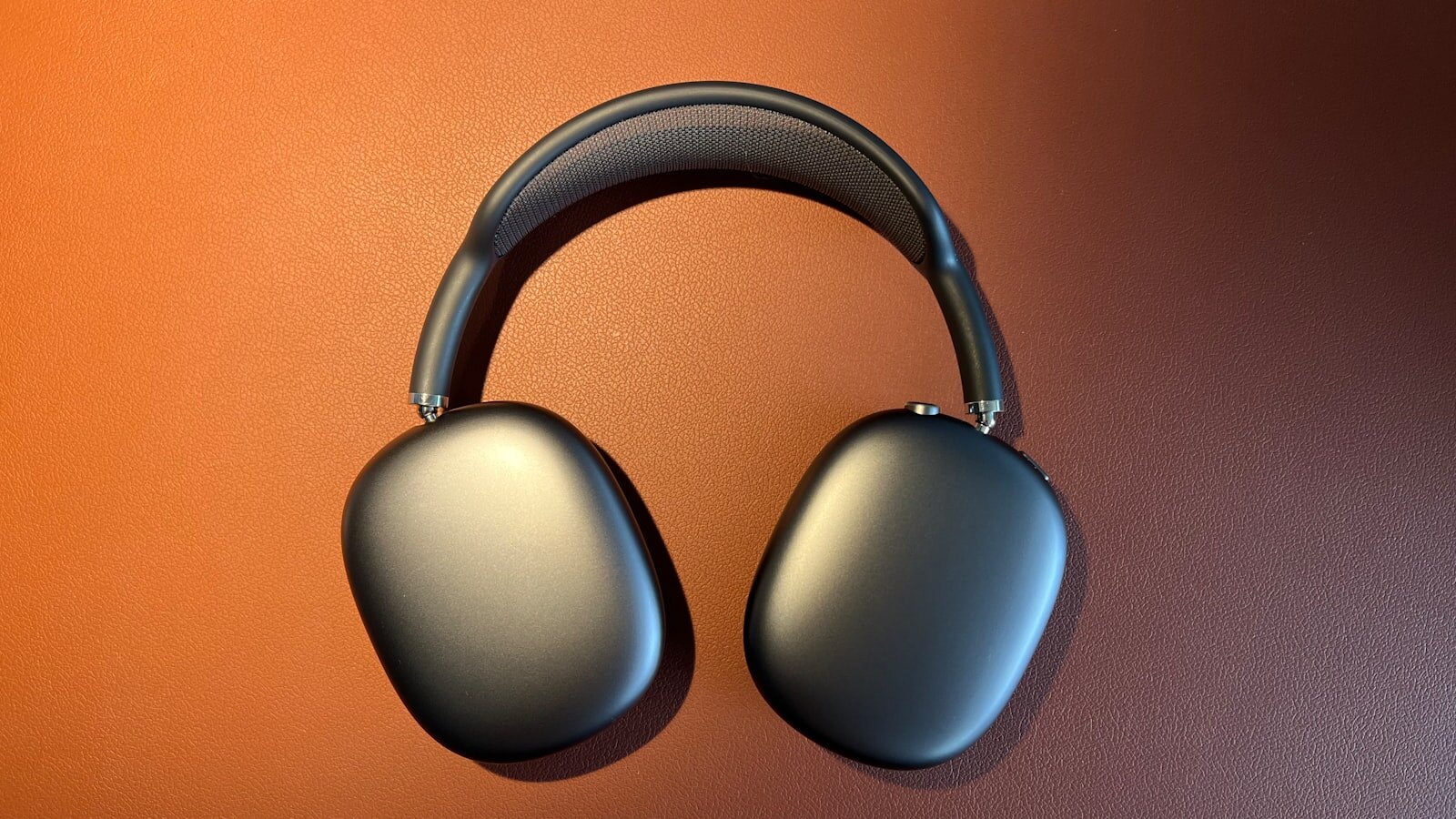
AirPods Max 2 Reviews Praise the Sound, Question the Upgrade Case
Apple’s second-generation over-ear headphones deliver the audio gains promised in March, but the first serious reviews say the unchanged design, 20-hour battery life, and $549 price make the story more complicated for existing owners.
Three weeks after Apple introduced AirPods Max 2, the first detailed reviews point to a familiar conclusion: the sound upgrade is real, but the rest of the package looks much closer to a refinement than a reboot. Apple’s March 16 announcement promised up to 1.5 times more effective active noise cancellation, a new high dynamic range amplifier, Adaptive Audio, Conversation Awareness, Live Translation, and 24-bit, 48 kHz lossless playback over USB-C.
The line’s history explains why sound is where the change landed. Apple launched the original AirPods Max in December 2020 at $549, built around the H1 chip and a Lightning port, then refreshed it in September 2024 with USB-C and new colors while leaving the internals alone. A firmware update the following spring added 24-bit, 48 kHz lossless audio and lower latency over that USB-C connection, so wired lossless is not itself new to the family. AirPods Max 2 is the first change of silicon in the line, which is precisely why reviewers found the audio transformed and everything around it familiar.
MacRumors said those promises largely hold up in practice. Its review described cleaner bass, more separation between instruments, and stronger noise cancellation than the original model. That matches Apple’s own positioning around the H2 chip and the updated signal processing. For buyers entering Apple’s over-ear lineup for the first time, those are meaningful gains, not cosmetic bullet points.
The hesitation starts with what did not change. The AirPods Max 2 still keep the same industrial design, the same Smart Case concept, and the same quoted battery life of up to 20 hours. MacRumors also noted that the headphones still weigh 385 grams, which keeps them on the heavier end of the premium over-ear market. Bloomberg reached a similar verdict on April 9, arguing that the new model is hard to justify as a full-price upgrade for owners of the 2020 original.
The weight figure is easier to read with the competition alongside it. Flagship over-ear models from Sony and Bose have historically weighed somewhere between 250 and 300 grams, folded or swiveled flat for travel, and quoted battery life in the region of 24 to 30 hours. The aluminum earcups, stainless steel headband and mesh canopy that give AirPods Max their distinctive feel are also what put them roughly a third heavier than that, and mass is the one specification no firmware update can address.
Twenty hours reads differently depending on how the headphones are used. It comfortably covers a long-haul flight with the film and the sleep at the end of it, and it is a non-issue for anyone who charges nightly at a desk. It becomes an irritation on a week of travel, where a rival quoting thirty hours can be treated as a device that simply works until you get home. Endurance is less about the number than about how often the number forces you to think about it.
None of which makes the unchanged design inexplicable. Over-ear headphones are a slow-refresh category, replaced every several years rather than annually, and Apple rarely alters an industrial design that an accessory ecosystem has grown around. Holding the shell constant while replacing the chip is a recognizable strategy; the difficulty is that it leaves the most frequently criticized parts of the product untouched for a second generation.
For buyers, the two questions reviewers are answering are worth keeping apart. Whether these are good headphones and whether they are worth replacing working ones are different problems, and iterative Apple hardware tends to score well on the first and poorly on the second. Someone entering the category who is invested in Apple’s ecosystem and spends real time in noise is buying a straightforward improvement. An owner of the 2020 or 2024 model, particularly one who already received the lossless firmware update, is being asked to pay full price for a better amplifier.
Two practical notes follow from that. Apple’s headphones are discounted at third-party retailers with some regularity once a generation settles, which changes the arithmetic more than any review does. And the 2025 firmware update is a reminder that meaningful capabilities have reached this product line without new hardware, which is an argument for patience rather than urgency.
That distinction matters for the editorial angle. The April 1 launch article on OneMoreThing covered what Apple announced; the April 9 follow-up is about what independent testing added. The practical takeaway is not that AirPods Max 2 disappoint across the board. It is that Apple appears to have built a better sounding pair of headphones without solving the questions reviewers still had about weight, endurance, and value at $549.