Steve Jurvetson / Wikimedia Commons, CC BY 4.0
A Plywood Science Project Steve Jobs Built at 13 Just Sold for $34,375
A science-fair project Steve Jobs built at 13 sold for $34,375 at RR Auction. Its silicon-controlled rectifier, family provenance and anniversary timing explain why a school project became a collector’s document.
From under $3,000 to $34,375
Bidding closed this week at RR Auction on a science-fair project Steve Jobs assembled in 1968, when he was 13. The plywood display had been below $3,000 shortly before the final days of the sale. It finished at $34,375, according to the auction coverage from 9to5Mac and MacRumors.
The lot belonged to a sale of nearly 150 items marking Apple’s fiftieth anniversary. Its price is not a valuation of a normal school project. It is a premium for an object connected to a founder before the company existed.
What is the SCR?
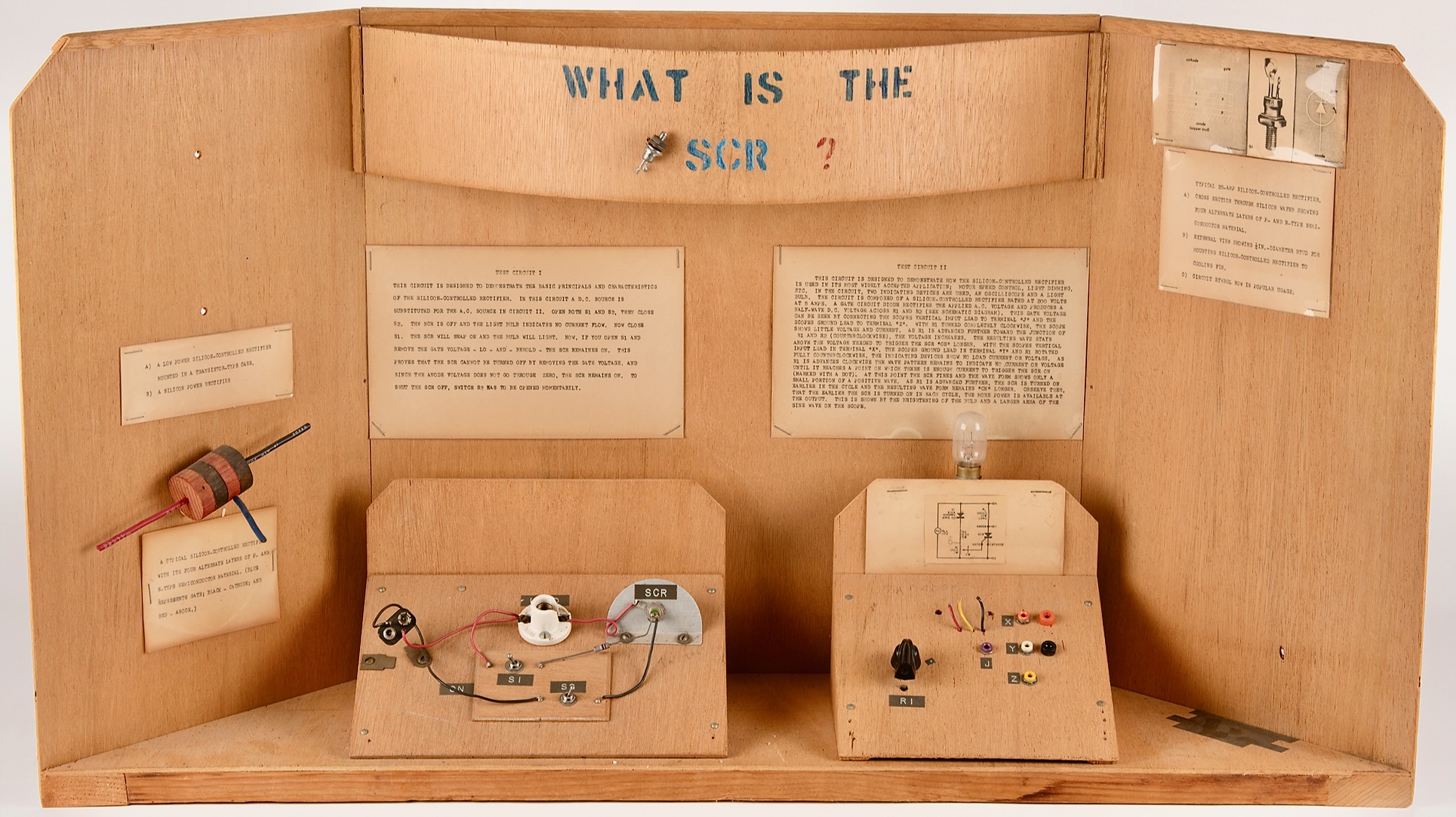
The hinged board carries two demonstration circuits and a ten-page report. Its title asks “What is the SCR?”, referring to the silicon-controlled rectifier. The panels explain the component with a wooden model of alternating P- and N-type semiconductor layers, test circuits and a diagram of a 25-amp unit. The report is dated February 29, 1968.
A silicon-controlled rectifier is a semiconductor switch that can remain conducting after a trigger. In the late 1960s it belonged to serious industrial electronics, including motor control and light dimming. The technical choice makes the project more revealing than a generic school display.
A note from the young builder
One instruction asks judges to connect the second circuit and an oscilloscope, then to unplug it afterwards. It is a small detail, but it changes the object from a static board into a demonstration designed for another person to operate. The project explains, tests and manages its own presentation.
That is an interpretation, not a prophecy. Nothing in the board proves what Jobs would later build. It does show a child choosing a difficult subject and presenting it with unusual care, which is why the physical object carries more information than a later signed product.
Six decades through the Jobs family
RR Auction says the project remained for decades at the Jobs family property in Los Altos. It reached the market through John Chovanec, a stepbrother by marriage. MacRumors reports that Steve Jobs repeatedly declined to collect old belongings, leaving the material in the family’s care.
The provenance is important because it connects the board to a documented household history rather than merely attaching a famous name after the fact. The photograph used here shows the same board and circuits, but it is not an RR Auction product photograph; the credit identifies its Wikimedia Commons origin.
The rest of the anniversary sale
The science project was not the highest-priced lot. A working Apple-1 from the second production batch reached $499,363. A Steve Jobs-signed Apple business card made $156,658, while other items from the family collection sold for smaller but still substantial sums. The comparison places the school project in the middle of a market with several levels of scarcity.
The board is rarer in one specific sense: it predates Apple and documents a technical interest before there was a company catalogue. Millions of Apple products exist; only one surviving school project can be this particular school project.
Why 2026 changed the context
Apple turned fifty on April 1, and anniversary auctions naturally encourage buyers to look for prehistory rather than only for commercial milestones. A school project does not explain the whole founder, and the auction price should not be mistaken for a historical consensus. It is nevertheless a primary object: a piece made by the teenager, preserved by the family and now photographed in detail.
That combination explains the result better than nostalgia alone. The SCR project is a technical document, a family-held object and an anniversary collectible at the same time. Its $34,375 price records how strongly those three stories can reinforce one another.
There is a useful limit to the comparison with Apple’s later machines. The project is evidence of early curiosity, not evidence that the teenager had already invented the company’s design philosophy. Collectors pay for the chain of custody and the singular connection to Jobs; historians can use the object, but should still distinguish what is visible on the board from the story later built around its maker.