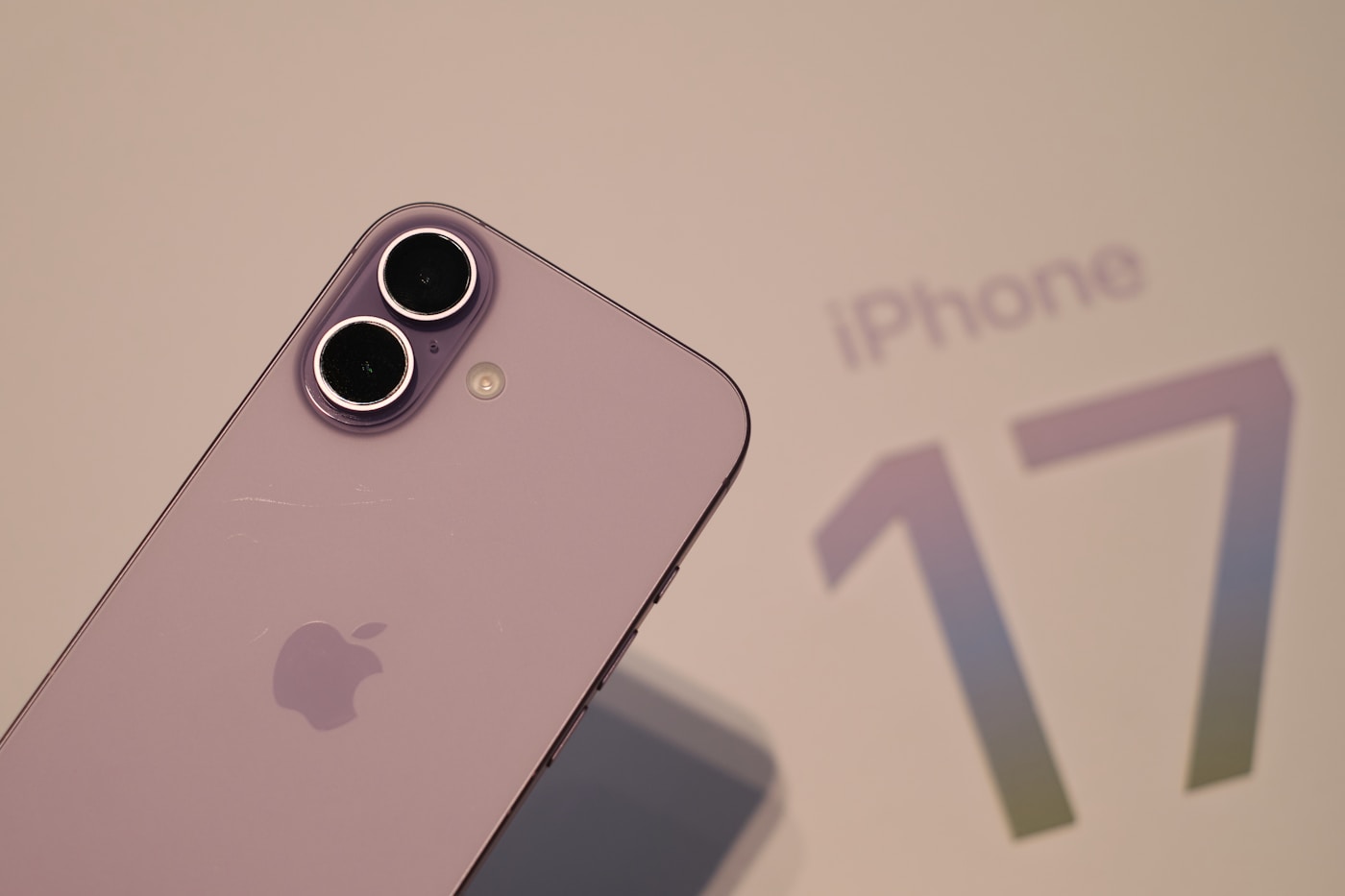
Unsplash — contextual photograph; the future hardware discussed is not shown.
The World's Best-Selling Phone Is the Cheapest iPhone Apple Still Makes
Counterpoint Research puts the standard iPhone 17 at the top of its global model ranking for a second straight quarter, with the Pro Max and Pro right behind it. Apple holds five of the ten places on a list drawn from a market that shrank 11%.
What a 6% share of a model ranking actually measures
Model-level rankings are a different exercise from the vendor share figures that usually make headlines. A vendor number aggregates every handset a company sells; a model number tracks one specific configuration family against every other phone on sale anywhere in the world. Several thousand distinct models compete in that pool at any given moment, most of them Android devices priced under 250 dollars and sold in enormous volumes across Asia, Africa and Latin America. Against that background, a single model taking 6% of all units sold is an unusual concentration. It reflects something Apple has engineered deliberately: a line-up of four or five products, refreshed once a year, sold at the same time in more than a hundred countries. Most Android manufacturers spread comparable volumes across dozens of references, which is why no individual Android phone reaches the same figure.
Apple and Samsung took every place in the top ten
Counterpoint says Apple and Samsung filled all ten positions on the quarterly ranking, with a combined 26% of worldwide unit sales — two percentage points more than a year earlier. Apple held five of those ten places. Alongside the three iPhone 17 models, the iPhone 17e came seventh after a refresh that added MagSafe and more storage at the same price, helped by carrier deals in the United States and Japan. The iPhone 16 closed the list at tenth. Samsung's best performer was the Galaxy S26 Ultra in fourth place. Counterpoint notes this is the first time Samsung's top-tier device has outsold every other Android phone in a second quarter, and links it in part to Samsung concentrating marketing spending on its flagships to protect margins as component costs climb. Samsung's cheaper Galaxy A range remained competitive lower down the ranking.
The base model is winning because it stopped being a compromise
The most interesting detail in Counterpoint's commentary is its explanation. The firm attributes the base iPhone 17's performance to "significant upgrades that narrowed the gap with the Pro models" — a description of a strategy, not an accident. For most of the past decade, Apple's entry model was defined by what it lacked: fewer cameras, a slower display, a chip one generation behind. Buyers who could stretch their budget went up a tier, and Apple's average selling price rose accordingly. Narrowing that gap reverses the incentive. It cannibalises some Pro sales, but it also makes the cheapest iPhone competitive against Android flagships that had been winning on specification rather than on price. Counterpoint credits the wider gains to regions outside Apple's traditional strongholds: India, Japan, and the Middle East and Africa, with sales in South Korea close to doubling. Those are markets where the price of the entry model, not the ceiling of the Pro Max, decides whether Apple grows.
A shrinking market makes these numbers easier to read wrongly
The ranking comes from a quarter in which the overall smartphone market contracted 11%. Counterpoint links that decline to the component shortages and price rises that have pushed manufacturers to concentrate their resources on their most profitable handsets — the same memory squeeze that has been visible across Apple's own product line this year, and that industry watchers expect to affect iPhone 18 Pro pricing. That context matters when reading a share figure. Holding 6% of a market that shrank by a tenth is not the same achievement as holding 6% of a growing one, and share can rise while absolute volumes fall. Counterpoint says Apple and Samsung both grew unit sales against the contraction, which is the more meaningful claim. It is also worth remembering that these are research estimates: Apple has not published per-model sales figures since 2018, and no tracker has access to its internal numbers.
What this means before September 9
Apple confirmed on 26 August that it will hold its next event on 9 September. There will be no standard iPhone 18 announced there — Apple has pushed the more affordable models to spring 2027, and the September line-up is expected to consist of the iPhone 18 Pro, the iPhone 18 Pro Max and the first foldable iPhone. For anyone shopping at the entry level, that has a practical consequence. The iPhone 17 will remain the cheapest current-generation iPhone in Apple's catalogue for roughly six more months, and it enters that stretch as the best-selling phone in the world rather than as a model waiting to be replaced. Buyers who would normally hold off through a September keynote have less reason to this year — the phone at the bottom of the range is not the one being refreshed. We covered the reasoning behind that split calendar in iPhone 18 Reported to Skip September.