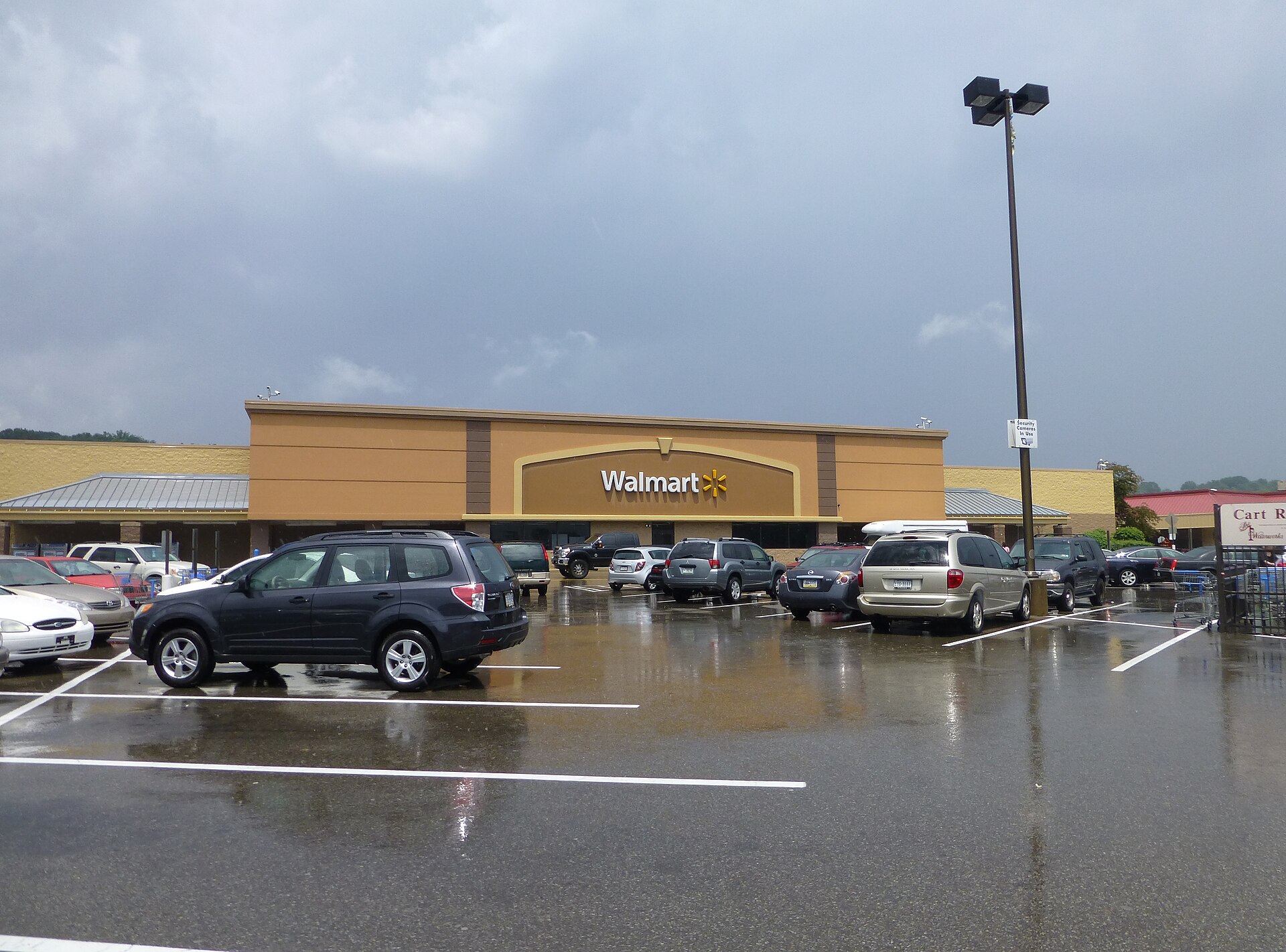
Nicholas Eckhart / Wikimedia Commons, CC BY 2.0
Walmart Starts Taking Apple Pay on Monday, Ending One of Retail's Longest Standoffs
Walmart announced on August 21 that its U.S. stores will finally accept tap-to-pay — Apple Pay included — from August 24 at selected locations. The rollout is planned to reach every U.S. store by the end of 2026 and gas stations by mid-2027.
What Walmart announced
The change is broader than Apple Pay alone. According to the company's announcement, checkout terminals will take NFC payments from Apple Pay, Google Pay and Samsung Wallet, along with contactless credit and debit cards. "We want customers and members to have choice in how they pay, so they can check out in the way that works best for them," Walmart said in its press release.
The rollout is staged. Only some Walmart and Sam's Club stores switch on tap-to-pay on August 24; Walmart has not published a list of the first locations. The company says all U.S. stores will accept contactless payments by the end of the year, while pumps at its gas stations will follow by mid-2027. Shoppers who walk into a Walmart next week should therefore be ready for either outcome — the terminal may take the tap, or it may still ask for a card in the slot.
Twelve years of saying no
To understand why this is news at all, it helps to remember how long Walmart held the line. Apple Pay launched in October 2014, and most large American chains connected it within a few years — the terminals installed for the chip-card transition already contained the necessary NFC hardware, so accepting the iPhone was often a software switch away. Walmart never flipped it. The retailer instead promoted Walmart Pay, its own system built into the Walmart app, which works by scanning a QR code at the register rather than tapping.
That choice was not an accident of hardware. Keeping payments inside its own app gave Walmart a direct view of what its customers buy and a way to route transactions toward cheaper payment rails, rather than paying the card networks' standard fees on every tap. For a company that processes an enormous share of American grocery spending, fractions of a percent per transaction add up to real money — and Apple Pay, which rides on the same credit and debit networks, did nothing to lower that bill.
The map of holdouts is now essentially empty
Walmart was not alone in resisting, but it outlasted everyone its size. The Home Depot, Lowe's, Kroger and the Texas grocery chain H-E-B all reversed course in recent years, according to MacRumors, leaving Walmart as the most prominent American retailer still refusing the tap. Apple, for its part, has said Apple Pay is accepted at more than 85 percent of U.S. retailers.
The U.S. was also the anomaly inside Walmart itself: the company's Canadian stores have accepted Apple Pay since 2020. An American shopper could tap an iPhone at a Walmart in Toronto but not in Texas — a gap that made the domestic refusal look less like a technical constraint and more like a negotiating position that had run its course.
What actually changes at the register
For iPhone and Apple Watch owners, the mechanics are the ones familiar from every other store: double-click the side button, hold the device near the reader, authenticate with Face ID or Touch ID. Apple Pay does not transmit the card number printed on your card; it sends a device-specific token and a one-time cryptogram, so the merchant never stores your real card details. That design, in place since 2014, is the main privacy argument for tapping a phone rather than inserting a card.
Walmart Pay is not going away. The announcement adds tap-to-pay alongside the QR system rather than replacing it, and Sam's Club keeps its Scan & Go option. The practical consequence for readers is simple: from Monday, an iPhone alone will eventually be enough to shop at any Walmart in the country — no Walmart app, no account, no QR code — with "eventually" meaning the end of 2026 for stores and mid-2027 for gas stations.
Why Apple wins more than a convenience point
Every Walmart terminal that starts taking the tap makes the iPhone's Wallet app more plausible as the thing that replaces the physical wallet entirely. Apple has been assembling that case piece by piece — payment cards, transit passes, keys, and driver's licenses, which reached four more states this month. The largest retailer in the United States refusing Apple Pay was the most visible counterexample; from next week it no longer is.
There is also a quieter financial angle. Apple collects a small fee from card issuers on Apple Pay transactions, so bringing Walmart's enormous checkout volume into the system feeds the services revenue line Apple has been cultivating for a decade. Neither company has disclosed the terms surrounding this rollout, and Walmart's announcement does not mention Apple beyond listing Apple Pay among the supported options.
Conclusion
Holdouts rarely announce why they surrender, and Walmart's press release frames the change entirely as customer choice. Whatever the internal arithmetic, the outcome is concrete: from August 24, the last big blank spot on Apple Pay's U.S. map begins to fill in, and by the end of 2026 the phrase "they don't take Apple Pay" should no longer apply to the country's largest retailer.
Walmart — More ways to pay: tap to pay is coming to Walmart and Sam’s Club
Axios — Walmart adding Apple Pay and other tap-to-pay options
CBS News — Walmart to let shoppers use Apple Pay and other tap-to-pay methods
MacRumors — Walmart to begin accepting Apple Pay in U.S. stores
TechCrunch — Walmart to finally start accepting Apple Pay and Google Pay