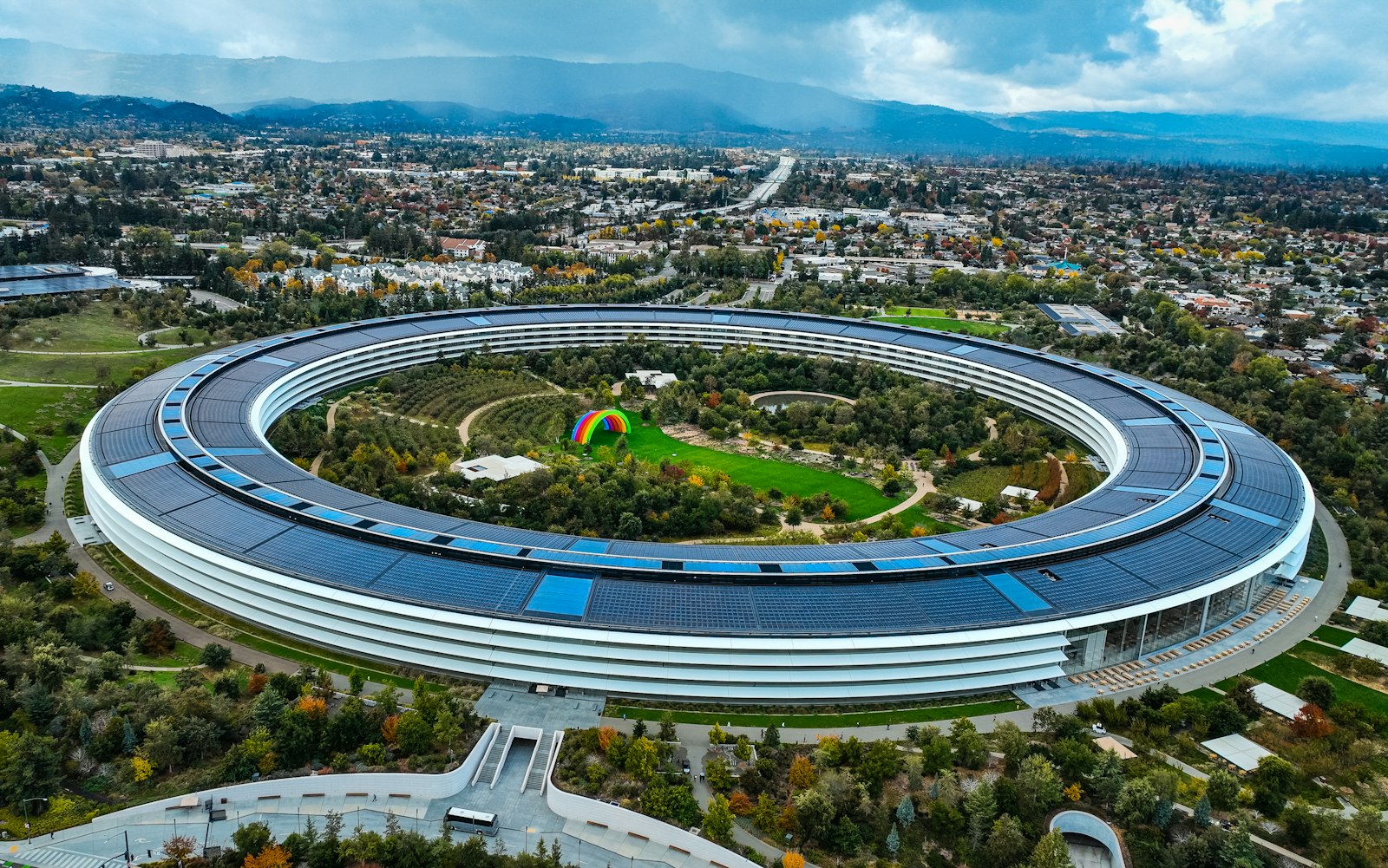
On April 1, 1976, Steve Jobs, Steve Wozniak, and Ronald Wayne founded Apple Computer, with nothing but ambition and a vision of personal computing. Five decades later, to the day, the company reached the anniversary not just as a corporation, but as a cultural institution that has shaped the lives of billions.
The garage story compresses a messier beginning. Wayne sold his share back twelve days later. The Apple I was a bare circuit board, bought by hobbyists who supplied their own case and keyboard. It was the Apple II, in 1977, that mattered — and it was software written by other people, the VisiCalc spreadsheet, that turned a machine for enthusiasts into something an accountant would buy. Hardware made indispensable by software Apple did not write is a pattern the company has repeated ever since.
The journey from garage to greatness was marked by defining moments that pushed the boundaries of what technology could achieve. The Apple II revolutionized personal computing by bringing computers into homes worldwide. The Macintosh introduced the graphical user interface to the masses, transforming computing from arcane to intuitive. The iPod didn't just create a new product category—it fundamentally changed how the world consumed music and digital content.
The arc was not continuous, and any honest fiftieth-anniversary account has to say so. Apple spent much of the 1990s losing money and market share, cycling through chief executives and a product catalog nobody could summarize. The turn came at the end of 1996, when Apple bought NeXT and Steve Jobs returned with it; the operating system NeXT had built became the foundation of Mac OS X and, by extension, of nearly everything Apple ships today. A $150 million investment from Microsoft in 1997 bought the breathing room to see it through.
The clearest marker of what the company became arrived in January 2007, when Apple dropped "Computer" from its name on the same day it introduced the iPhone. The Mac had by then stopped being the center of the business, and the phone would go on to make the App Store, the Apple Watch, AirPods and the services division possible in turn. Fifty years in, the company's defining product is younger than half its own history.
Apple's impact extends far beyond hardware. The company's ecosystem philosophy—seamlessly connecting iPhone, iPad, Mac, Apple Watch, and services—created an entirely new standard for user experience. This integration became the gold standard that competitors still struggle to match.
The App Store, launched in 2008, created an entirely new economic model for software distribution and spawned countless developers and entrepreneurs. Services revenue reached $109 billion in fiscal 2025, the first year Apple's services business cleared $100 billion, and passed $30 billion in a single quarter for the first time in the December 2025 quarter. Apple's influence now runs well beyond physical products, into digital experiences and payments.
Through five decades, Apple maintained an unwavering commitment to design excellence. Every product, from the earliest Macintosh to the latest M5-powered machines, bears the signature of meticulous attention to detail, elegant simplicity, and functional beauty. Tim Cook, who took the helm in 2011, has continued this legacy while expanding Apple's environmental commitments and social responsibility programs.
The anniversary itself was marked over several weeks rather than in a single day. Tim Cook opened the sequence on March 12 with a letter titled "50 Years of Thinking Different," and Apple then staged surprise concerts and events around the world in the second half of March: Alicia Keys played the Grand Central Terminal store in New York on March 13, Mumford & Sons performed outside Apple's UK headquarters at Battersea Power Station, and iPad artwork was projected onto the sails of the Sydney Opera House. On March 31, Apple's senior leadership rang the Nasdaq opening bell from Apple Park, and that evening employees gathered under the campus's rainbow arches for a set by Paul McCartney. On April 1 itself, Apple replaced its homepage with an anniversary animation. No commemorative product was released.
Today, with more than 2.5 billion active devices worldwide — the figure Tim Cook disclosed on the January earnings call — and a market capitalization close to $4 trillion, Apple is among the two or three most valuable public companies in the world, a position it has spent the past year trading with Nvidia. The installed base of users creates a powerful ecosystem that continues to drive innovation in artificial intelligence, health technology, spatial computing, and beyond.
The financial scale arrived late. Apple went public in December 1980 and did not reach a trillion dollars in market value until 2018, two trillion two years after that. Most of what the company is worth was created in the second half of its life, by a product line that did not exist for the first three decades of it.
An anniversary is also an occasion for the parts of the record that do not fit a celebration. Apple's control over the App Store has drawn antitrust scrutiny on both sides of the Atlantic for most of the past decade. Its manufacturing has been concentrated in a handful of countries in ways that proved politically fragile. Its positions on repair and on what software users may install have been contested for years. These are not footnotes to the company's success; they are consequences of the same integration that produced it.
The company turning fifty is also structurally unlike the one that nearly failed. Apple's problem in 1996 was that it had no dependable revenue beyond the boxes it shipped. Today the installed base is itself the business, and the income it generates arrives whether or not any given launch lands. The risk has inverted: the danger is no longer running out of money but running out of categories large enough to matter at this size.
Looking toward the next chapter, Apple faces new frontiers in AI integration, wearable health technology, foldable devices, and immersive spatial computing experiences. The company's strategy emphasizes privacy-first computing, on-device processing, and responsible AI deployment—values that remain true to its foundational principles of putting the user first.
Apple's first 50 years established the company as not merely a manufacturer of electronic devices, but as a cultural force that elevated design, computing, and human experience. As the company enters its next era, the question isn't whether Apple will continue innovating—it's how the world will change in response.