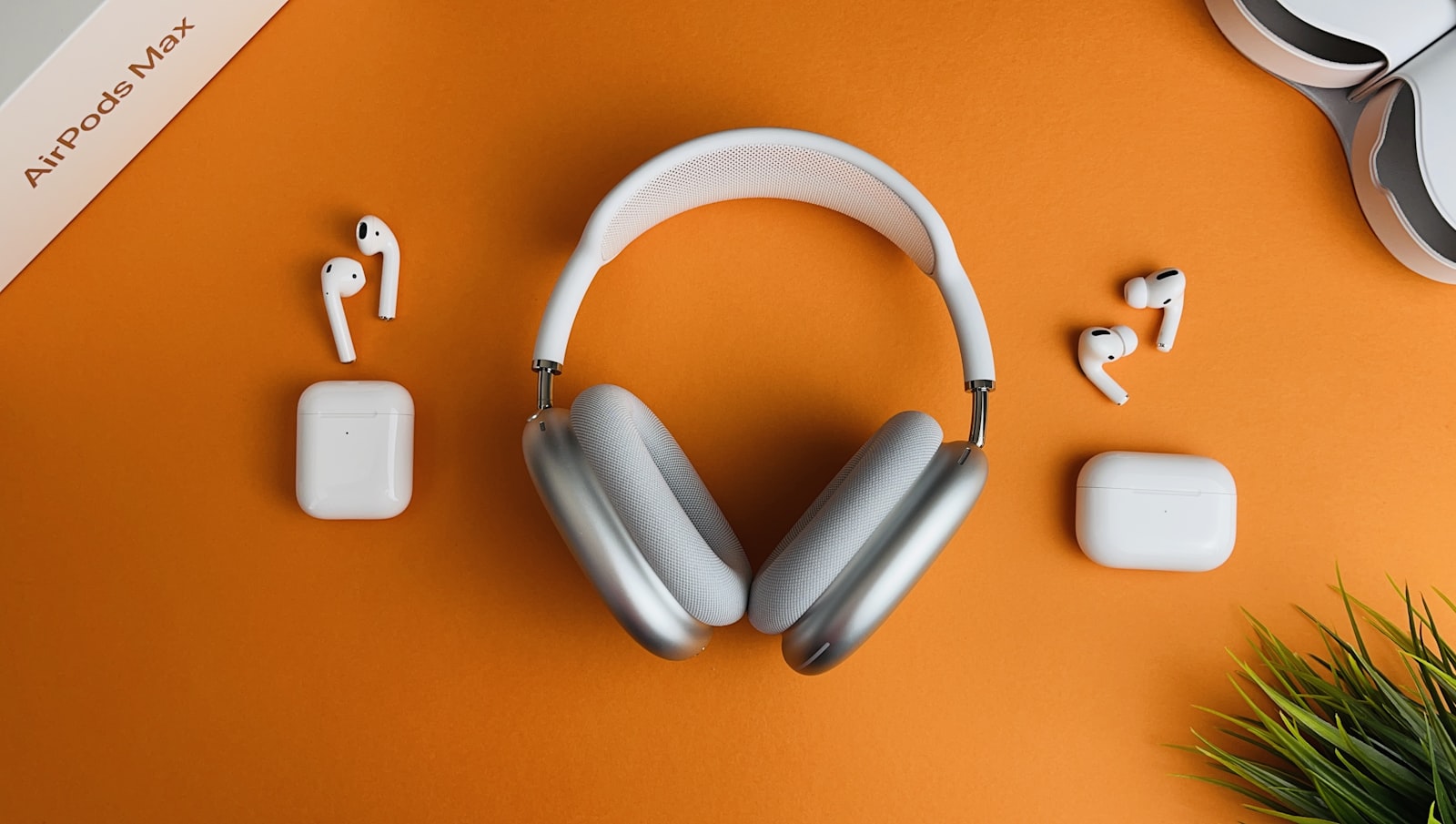
AirPods Max 2 represents Apple's commitment to audio excellence and innovation in premium wireless headphones. The H2 chip upgrade delivers improvements across multiple dimensions, from noise cancellation to conversational awareness features that make the headphones more intelligent and contextually aware.
The chip is the headline because of how long it took to arrive. AirPods Max reached the market in December 2020 with a pair of H1 chips, the same silicon generation as the second-generation AirPods, and Apple left them in place for the whole of the product's first life — including the 2024 revision that swapped Lightning for USB-C and added new colors but changed nothing inside the cups. H2, meanwhile, had been shipping in AirPods Pro since 2022.
That history sets the expectations. On the in-ear models, moving to H2 is what made Adaptive Transparency possible, and it is what allowed Apple to add Adaptive Audio and Conversation Awareness in software a year later. Personalized Spatial Audio is not part of that list: it has worked on the H1-based AirPods Max since 2022. Much of what Apple lists for AirPods Max 2 is therefore less a new invention than the over-ear model finally receiving the capabilities its smaller sibling has had for several years.
Improved noise cancellation leverages the H2 chip's processing power to analyze ambient sound more effectively. Apple puts the gain at up to 1.5x more effective active noise cancellation than the previous generation, and says a new digital signal processing algorithm tuned for H2 and the existing microphone array makes Transparency mode sound more natural. Both claims are Apple's own; no independent measurements were available at announcement.
The form factor is not neutral in that comparison. A sealed cup blocks low frequencies passively in a way silicone tips cannot, so an over-ear design running the same algorithms has an easier job below a few hundred hertz and a harder one with fit variation, glasses and wind noise. The larger enclosure also leaves room for a bigger driver and more power, which is why over-ear headphones have historically had a ceiling earbuds do not reach.
Adaptive Audio adjusts the balance between noise cancellation and Transparency according to the environment, without the wearer switching modes by hand. Alongside it, Personalized Volume tunes the level to the surroundings and to the listener's own habits, and Voice Isolation prioritizes the wearer's voice on calls.
Conversation Awareness is the feature that most changes day-to-day use. When the headphones detect that the wearer has started speaking to someone nearby, they lower the content volume and reduce background noise so the exchange can happen without taking the headphones off.
Live Translation, which Apple runs on Apple Intelligence, is meant to let two people hold a conversation across languages with the translation delivered through the headphones. Frequent travelers and international professionals are the obvious audience, though the list of supported language pairs is considerably shorter than the pitch suggests.
Audio quality improvements derive from the H2 chip's signal processing and from a new high dynamic range amplifier, which Apple credits for cleaner output. Wireless connectivity moves from Bluetooth 5.0 to Bluetooth 5.3, and Apple says wireless audio latency is lower than on the previous generation. There is no new wireless codec: as before, the highest-quality playback is 24-bit, 48 kHz lossless over the included USB-C cable.
One point is worth stating precisely, because it is routinely muddled. Apple added lossless and ultra-low-latency playback to the original AirPods Max in early 2025, over a wired USB-C connection rather than over the air. The limit on wireless audio quality is Bluetooth's available bandwidth, not the processor in the headphones, and no amount of headphone silicon changes that on its own.
Live Translation carries the most caveats of anything in the feature list. Because it runs on Apple Intelligence, it is tied to a supported iPhone, a supported language pair and the region the phone is set up in — restrictions that have applied since the feature launched on the in-ear models. Anyone buying primarily to translate should check the current language list rather than assume it includes the pair they need.
Spatial audio with dynamic head tracking creates immersive three-dimensional soundscapes that adapt as the user moves their head. This technology enables cinematic audio experiences in movies, games, and music content encoded with spatial audio metadata.
Battery life is unchanged: Apple advertises up to 20 hours of listening on a single charge with active noise cancellation enabled, the same rating as the previous generation. The H2 chip absorbs the extra processing without costing endurance.
The industrial design is also carried over, down to the Smart Case and the absence of a power button. The headphones keep the aluminum and textile construction, the Digital Crown, and the same five colors as the USB-C model: midnight, starlight, orange, purple and blue. One control is new — Camera Remote, which lets a press of the Digital Crown take a photo or start and stop a video recording on a paired iPhone or iPad.
Pricing stays at $549 in the United States, the same as the previous AirPods Max, which Apple has stopped selling. For professionals in audio, frequent travelers, and users who want the most integrated wireless listening setup Apple sells, that is the whole of the calculation.
Integration with Apple's ecosystem remains seamless, with automatic device switching, iCloud synchronization of preferences, and tight integration with iPhone, iPad, Mac, Apple Watch, and Apple TV. Users benefit from consistent excellent experience across all Apple devices.
Against alternatives like Sony's WH-1000XM6, which arrived in May 2025 at $449.99, and Bose's flagship models, AirPods Max 2 competes less on raw audio quality than on ecosystem integration and on Apple-only features such as Conversation Awareness and Live Translation. It also remains the most expensive of the three.
For owners of the 2020 model the practical calculus is narrower than the feature list suggests. That hardware still receives Apple's software updates, still carries the same 20-hour rating, and already gained wired lossless playback without a new purchase. The features that genuinely require the newer chip are the awareness ones — the headphones reacting to the wearer's voice and surroundings — which is a real difference, but a smaller one than a generational jump usually implies.
AirPods Max 2 solidifies Apple's position as a leader in premium wireless audio, combining technical excellence with intelligent software features that enhance real-world usability and user satisfaction.