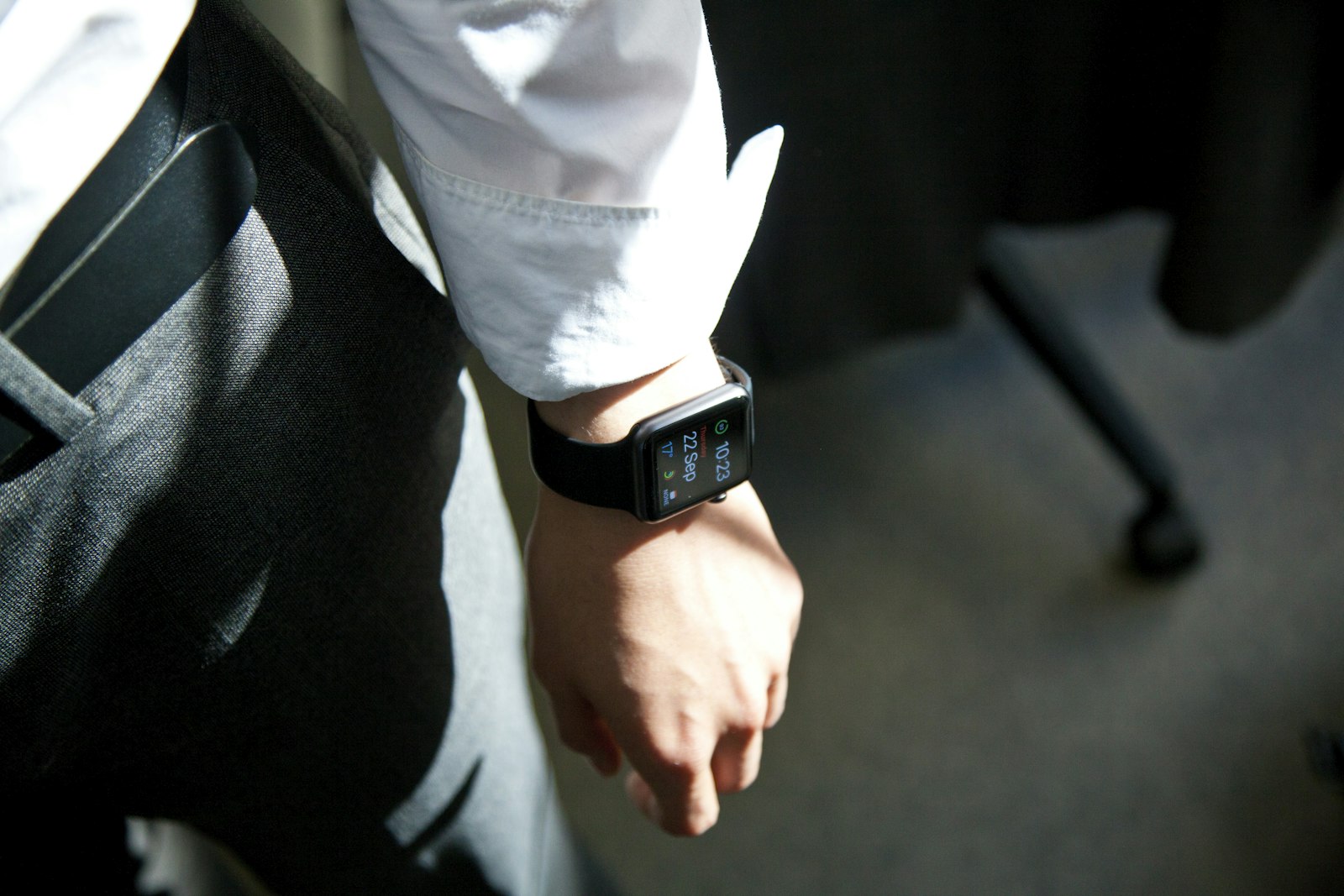
Apple's health monitoring has moved from step counting toward features that regulators have to sign off on. The clearest example is hypertension notifications, announced with the Apple Watch Series 11 on September 9, 2025, cleared by the FDA a few days later and rolled out with watchOS 26 to more than 150 countries and regions. It is an important feature, and it is also widely misunderstood: the Apple Watch does not measure blood pressure, and Apple has never said that it does.
The shift has been incremental rather than sudden. The Apple Watch arrived in 2015 as a notifications and fashion device with a fitness ring on the side; heart rate notifications, the electrocardiogram feature cleared by the FDA in 2018, irregular rhythm alerts and fall detection each pushed it a little further into territory that regulators, and not merely reviewers, take an interest in.
What hypertension notifications actually do is narrower than the headlines suggested. In Apple's own description, the feature uses data from the optical heart sensor to analyze how a user's blood vessels respond to the beats of the heart. The algorithm works passively in the background, reviewing data over 30-day periods, and notifies the user if it detects consistent signs of hypertension. It produces no numbers: there is no systolic reading, no diastolic reading, and nothing that can be substituted for a cuff.
Apple is explicit about the limits. The feature was developed using machine learning and training data from studies totaling more than 100,000 participants, then validated in a clinical study of more than 2,000 people, and Apple states plainly that it "will not detect all instances of hypertension." It is not intended for people under 22, for anyone already diagnosed with hypertension, or during pregnancy. If a notification arrives, Apple's guidance — consistent with American Heart Association recommendations — is to log blood pressure for seven days with a third-party cuff and bring the results to a clinician.
Where that leaves a buyer depends heavily on geography. Health clearances are granted jurisdiction by jurisdiction rather than globally, which is why Apple's health features have historically appeared in some countries months or years ahead of others, and occasionally not at all. The hardware in a given watch and the features switched on in it are two different questions. Hypertension notifications run on Apple Watch Series 9 and later and Apple Watch Ultra 2 and later, provided the watch is updated to watchOS 26 — so this is a software feature on existing hardware, not a reason on its own to buy a new watch.
The other health addition of that generation is sleep score, which grades a night's sleep on duration, bedtime consistency and interruptions. Apple says the scoring approach draws on guidance from the American Academy of Sleep Medicine, the National Sleep Foundation and the World Sleep Society, and that the algorithms were developed and tested using more than five million nights of data from the Apple Heart and Movement Study.
Some of what circulates about the Apple Watch is not a feature at all. Apple has not announced stress detection alerts, and there is no published Apple specification for a watch that doubles its sensor count. Non-invasive blood glucose monitoring — the measurement people most often expect next — is still thought to be several years away, and the Apple Watch Series 12 expected this fall is reported to bring internal changes only. None of that has been confirmed by Apple.
Health data privacy remains a genuine differentiator. Health data is encrypted on the device and in iCloud when backup is enabled, and users decide which health features are switched on and what is shared with apps or with a clinician.
The Apple Watch ecosystem has attracted healthcare institutions and insurers interested in bringing wearable data into clinical and actuarial workflows. Some insurers offer premium discounts or rewards to Apple Watch owners who hit activity targets, which creates a financial incentive for adoption — and, less comfortably, a commercial interest in the data.
Regulation is not the only external constraint on what a sensor can do. Apple disabled blood oxygen measurement on watches sold in the United States from January 2024, following a ruling in its patent dispute with Masimo, removing a health feature from new units after years of availability. A redesigned version returned in August 2025 with iOS 18.6.1 and watchOS 11.6.1, in which the watch collects the data but the iPhone calculates and displays the result. Litigation, quite as much as clinical validation, can determine which sensors a buyer actually ends up with.
Competitive advantages from Apple Watch health features create powerful ecosystem lock-in. Users accustomed to years of health history become reluctant to switch to a smartwatch that cannot import it, which strengthens Apple's wearables business and encourages further purchases inside the ecosystem.
The regulatory picture is not becoming permissive, either. Hypertension notifications required FDA clearance before Apple could ship them, as the ECG app did in 2018 and sleep apnea notifications did in 2024. What has changed is that the pathway is now familiar to both sides, which shortens the process — it does not remove it.
Users should treat the output accordingly. A notification is a prompt to get measured properly, not a diagnosis, and no wearable output is grounds for changing medication. The productive move is to keep wearing the watch consistently, take the notification to a doctor, and confirm it against a validated cuff.
The Apple Watch's evolution from fitness tracker toward a screening device demonstrates Apple's ability to identify a widespread, under-diagnosed condition and build something useful around it. Apple expects hypertension notifications to flag more than a million people with undiagnosed high blood pressure in their first year — a substantial public health contribution, and one that works precisely because the company kept the claim modest.