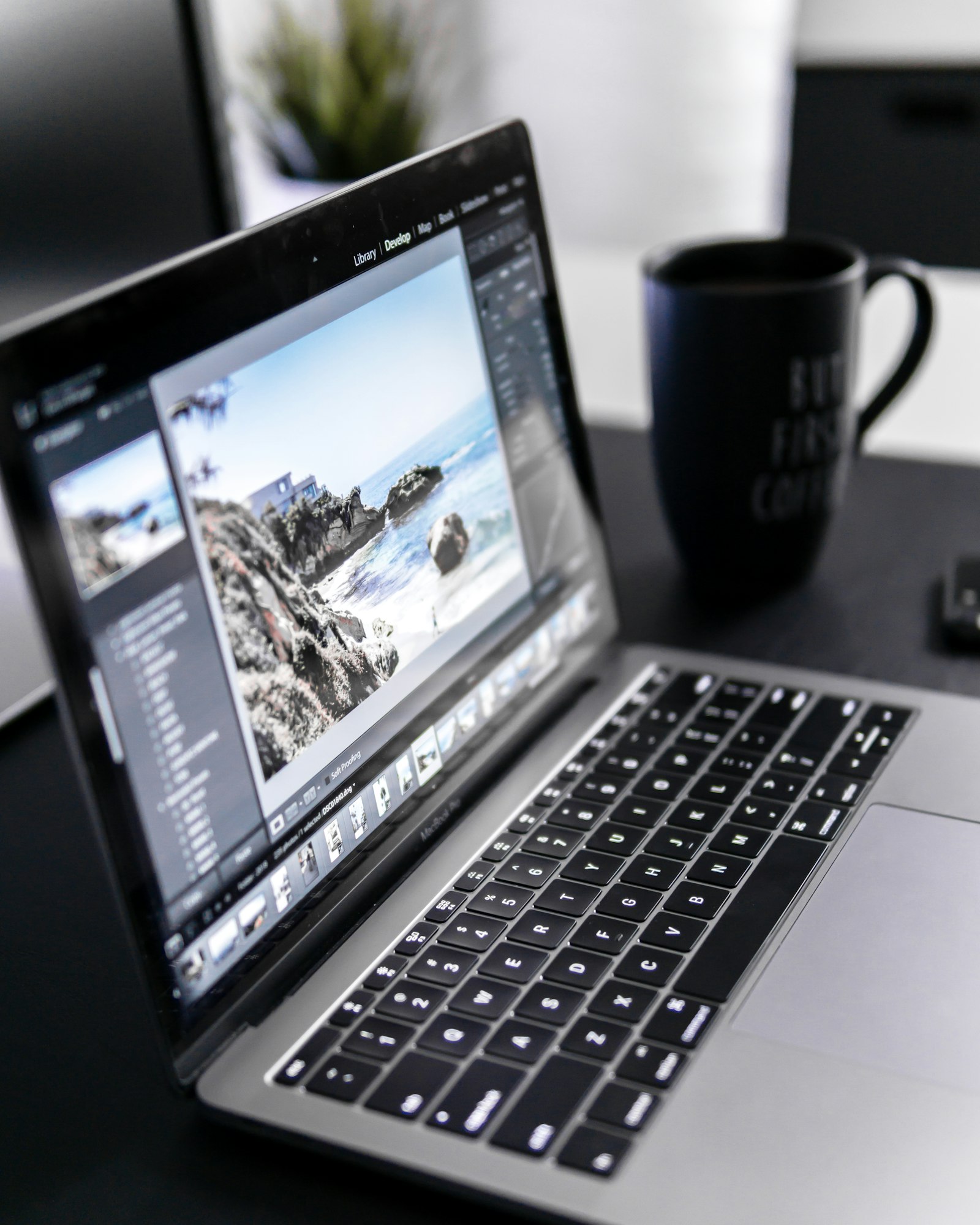
The MacBook Pro M5 Pro and M5 Max represent Apple's most powerful laptop offerings, engineered specifically for professional workflows that demand extreme performance, reliability, and computational power. These machines represent the apex of Apple's silicon design capability and competitive advantage over traditional Intel and AMD-based laptops.
That standing has not been continuous. The Pro line spent 2016 to 2019 on different priorities — the butterfly keyboard, the Touch Bar, the removal of every port but USB-C — and shed considerable professional goodwill doing it. The 2021 redesign reversed nearly all of that, restoring HDMI, the SD slot and MagSafe.
Both chips share the same CPU this time: an up-to-18-core design made of six "super cores" — Apple's new name for its highest-performance cores — and 12 performance cores, up from the 14-core M4 Pro and 16-core M4 Max. The graphics divide the two apart. M5 Pro reaches up to 20 GPU cores, while M5 Max doubles that to 40. Apple claims up to 30 percent faster multithreaded CPU performance than the M4 generation, and up to 2.5x faster than M1 Pro and M1 Max.
Apple's Fusion Architecture bonds two third-generation 3nm dies into a single system on a chip, a first for Apple silicon after years of single-die designs. The two bonded dies carry the CPU, GPU, Media Engine, Neural Engine, unified memory controller and Thunderbolt 5 capability together, letting the company scale performance beyond what one die allows. Apple has not published sustained-load thermal figures, so how the packaging behaves over long renders remains to be measured independently.
Ray tracing improves too, with Apple claiming up to 35 percent faster ray-traced workloads than the previous generation, and up to 50 percent faster graphics overall. For video editors, 3D artists, architects and game developers, that acceleration makes previewing complex scenes with realistic lighting and reflections more practical — although, as with the CPU figures, these are Apple's own tests rather than independent benchmarks.
The M5 Max variant targets the most demanding professional scenarios, with configurations up to 128GB of unified memory and 614GB/s of memory bandwidth. M5 Pro tops out at 64GB, up from 48GB on M4 Pro, with 307GB/s. Combined with the 40-core GPU, that capacity is what makes work on massive datasets, complex machine learning models and intricate creative projects feasible on a laptop.
Unified memory is why those capacities matter. On Apple silicon the CPU and GPU draw on a single pool rather than a discrete card's fixed allocation, so graphics and machine learning workloads scale with the configuration ordered instead of a separate VRAM figure. That memory is soldered, which makes it the decision that ages worst.
Media engine improvements specifically target professional video and audio workflows. The hardware accelerates encoding and decoding of ProRes, ProRes RAW, H.264 and HEVC, and this generation adds hardware-accelerated AV1 decode. Professionals working with 4K and 8K footage can edit and grade with real-time playback previews.
The Neural Engine stays at 16 cores, but Apple says it is faster, more power-efficient and better connected to memory, which speeds up on-device Apple Intelligence tasks. The larger AI gain comes from the Neural Accelerator now sitting in every GPU core: Apple claims more than 4x the peak AI compute of M4 Pro and M4 Max, and up to 4x faster LLM prompt processing. Video editors can apply machine learning effects, audio engineers can use AI noise reduction, and developers can run models locally without cloud dependencies.
The 14- and 16-inch models keep the Liquid Retina XDR display with ProMotion at up to 120Hz, 1600 nits of peak HDR brightness, up to 1000 nits for SDR content, and an optional nano-texture finish. For creative professionals working with high-speed photography, video analysis, or any task requiring smooth scrolling, the variable refresh rate remains a clear improvement over a fixed 60Hz panel.
Battery life is rated at up to 24 hours on the 16-inch model, according to Apple's own testing, and the machines fast-charge to 50 percent in 30 minutes with a 96W or higher USB-C adapter. Apple also notes that, unlike many PC laptops, the MacBook Pro delivers the same performance on battery as when plugged in.
Connectivity is broad: three Thunderbolt 5 ports, each with its own dedicated controller so all three can run at full bandwidth at once, HDMI supporting up to 8K, an SDXC slot and MagSafe 3. The N1 wireless chip brings Wi-Fi 7 and Bluetooth 6, replacing the Wi-Fi 6E and Bluetooth 5.3 of the M4 generation. M5 Pro drives up to two external displays, M5 Max up to four.
The MacBook Pro M5 lineup positions itself as a complete system solution for creative professionals. When paired with Apple's professional applications like Final Cut Pro, Logic Pro, and the broader ecosystem of professional software, the combination delivers performance that rivals or exceeds specialized workstations while maintaining portability for professionals who work across multiple locations.
Pricing reflects the premium positioning of these machines, and it has risen. In the United States the 14-inch MacBook Pro with M5 Pro starts at $2,199 and the 16-inch at $2,699; the M5 Max versions start at $3,599 and $3,899 respectively. Base storage moves up with them, to 1TB on M5 Pro models and 2TB on M5 Max, with read and write speeds Apple rates at up to 14.5GB/s. The entry-level 14-inch MacBook Pro with the standard M5 chip remains at $1,699. For professional users whose income depends on fast rendering times, responsive editing, and reliable performance, the investment in M5 Pro or M5 Max represents a productivity multiplier that pays dividends through entire project lifecycles.
For most buyers the binding constraint is memory rather than core count. Whether a workload can genuinely use forty GPU cores depends on how parallel it is, and much professional video work leans on fixed-function media hardware instead. Establishing which path a given application takes is worth more than comparing spec sheets.
The MacBook Pro M5 lineup solidifies Apple's position as the choice of creative professionals worldwide, offering uncompromising performance, design excellence, and ecosystem integration that competitors cannot match.