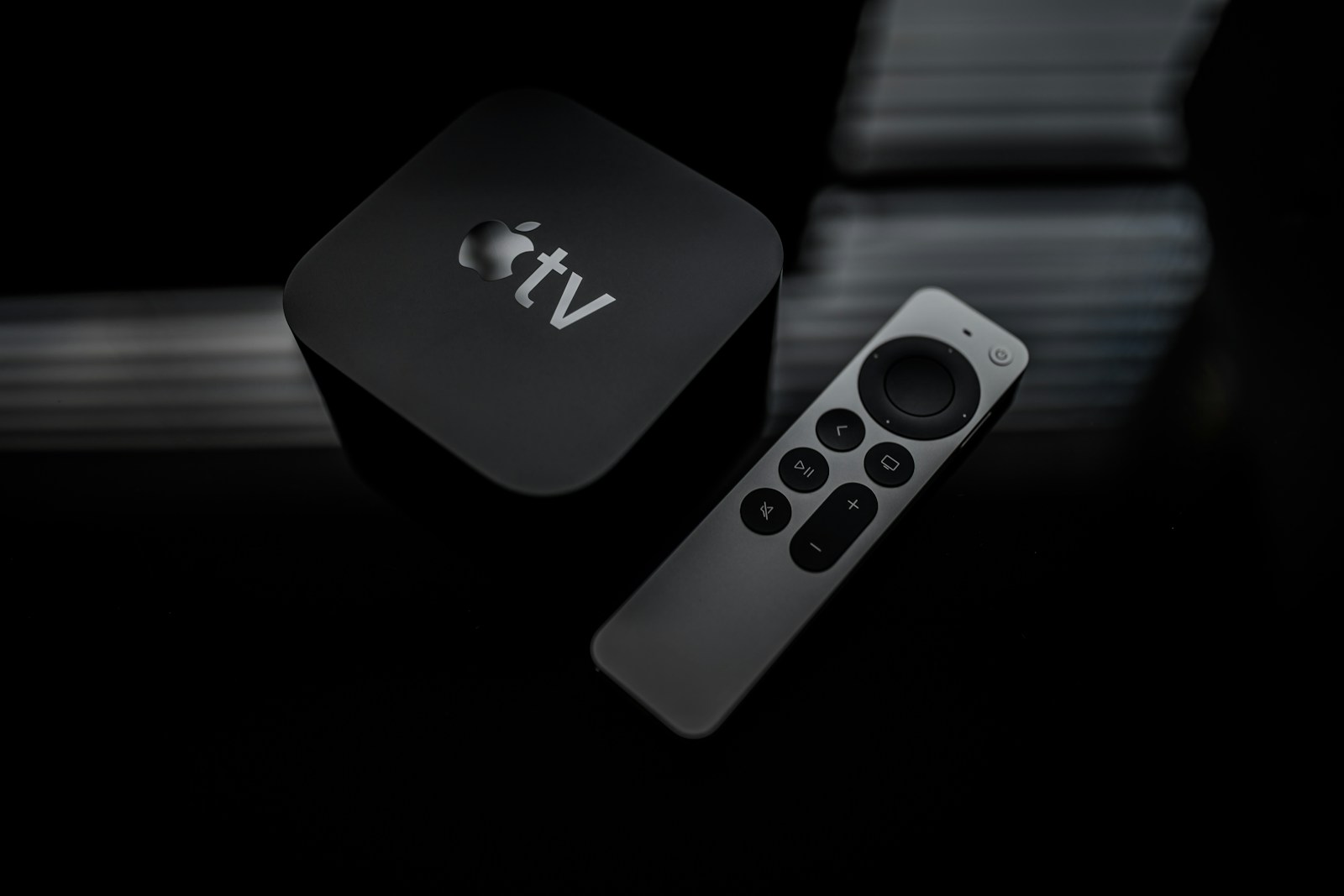
Omar Rodriguez / Unsplash · Unsplash License
Apple Waited Eleven Days to Tell Anyone What tvOS 27 Actually Changed
Apple released tvOS 27 on September 14, alongside iOS 27, watchOS 27, and macOS Golden Gate. But if you own an Apple TV and went looking for a list of what had changed, you found nothing. The device does not display release notes in its Settings app, and Apple's own support page describing the update did not go live until September 25 — eleven days after the software had already reached users.
That gap is not just a curiosity for people who like reading changelogs. It means that for over a week and a half, features Apple had built and shipped were effectively undocumented: no official list existed anywhere that a user could consult from the device itself, and even the web version took Apple's own communications team more than a week to publish. For a company that markets its ecosystem on tight coordination between hardware, software, and support material, an eleven-day blackout on a released product is a genuine process failure, not a minor inconvenience.
What tvOS 27 actually adds
According to Apple's delayed release notes, tvOS 27 touches three areas of the Apple TV experience: Music, Podcasts, and system-wide accessibility.
In Apple Music, the update adds Hi-Res Lossless audio playback, matching a tier Apple already offers on iPhone and Mac, so a home theater system connected to an Apple TV 4K can now output the same studio-quality streams. Alongside it comes AutoMix, a feature that blends one track into the next with time-stretching and beatmatching, mimicking what a human DJ does during a transition rather than simply cutting from song to song.
The Podcasts app has been rebuilt to support video podcasts directly on the television screen, a format that has grown rapidly on YouTube and Spotify but had no dedicated home on Apple TV until now. Transcribed audio has also been added, generating captions for content that does not ship with official subtitles — useful not just for accessibility but for anyone watching with the sound low.
The accessibility features are the real story
Two changes matter more than their brief mention in Apple's notes suggests. The first is Dynamic Text support, which lets a user set a single preferred text size that applies across every supported app on the Apple TV, rather than hunting through each app's own settings menu — or discovering that some apps have no text-size option at all. The second is a new ability to block individual apps from launching, controlled from the Settings app.
Neither feature is flashy, but both address long-standing complaints from accessibility advocates and from parents managing what children can access on a shared living-room device. Apple has offered per-app restrictions on iPhone and iPad for years through Screen Time; extending a version of that control to the Apple TV closes a gap that existed simply because the platforms evolved on different schedules.
Why the silence matters more than the software
Apple's release-note habits for tvOS have been inconsistent for years, largely because the Apple TV interface itself never surfaced them — unlike iOS, where a user swiping through Settings > General > Software Update sees the list immediately after installing an update. That structural gap has let tvOS documentation slip for weeks at a time in past years without drawing much attention, because the Apple TV audience is smaller and quieter than the iPhone audience.
This time, the eleven-day delay landed during a month when Apple published documentation for Apple’s other operating systems within days of their release, making the contrast unusually visible. It also arrived the same week MacRumors contributor Aaron Perris uncovered internal Apple image files pointing to an unreleased fourth-generation Apple TV 4K, meaning the two Apple TV stories reaching the public in the same week told opposite tales: one about hardware Apple has not yet acknowledged, and one about software documentation for hardware already in customers' living rooms that Apple also had not gotten around to acknowledging.
What this means if you own an Apple TV
If your Apple TV has already installed tvOS 27, none of this requires action — the features described above are already active. Owners of the first-generation Apple TV 4K and the Apple TV HD should note they are not eligible for tvOS 27 at all; the update supports the Apple TV 4K (2nd generation) and newer, a cutoff that ends software support for the original 4K box roughly nine years after its release.
For anyone using an Apple TV as a household's shared living-room device, the practical step worth taking is visiting Settings to review the new per-app blocking control, since it did not exist before this update and is not something most households currently think to check.
A pattern to watch, not a one-off
Judged purely on content, tvOS 27 is a modest release: better audio, video podcasts, and two accessibility additions. Judged on process, it is the latest example of Apple treating its television platform as an afterthought in its own communications, even as it continues to sell four Apple TV 4K variants and prepares another hardware generation. Whether Apple tightens that gap before the next tvOS point release, or whether documentation again trails installation by more than a week, will say more about how the company prioritizes the platform than any single feature in this release does.