Amanda Slater / Wikimedia Commons · CC BY-SA 2.0

Apple Is Opening a 600-Seat Concert Hall Inside a London Power Station
Apple confirmed on September 25 that its first purpose-built concert venue, Apple Music Hall, is scheduled to open on September 28 inside London's Battersea Power Station, with Elton John performing the inaugural show. The announcement, made jointly by Apple Music and the artists' teams, lists eight confirmed performances running through early December, with every show streamed live and free on Apple Music worldwide.
What Apple actually built
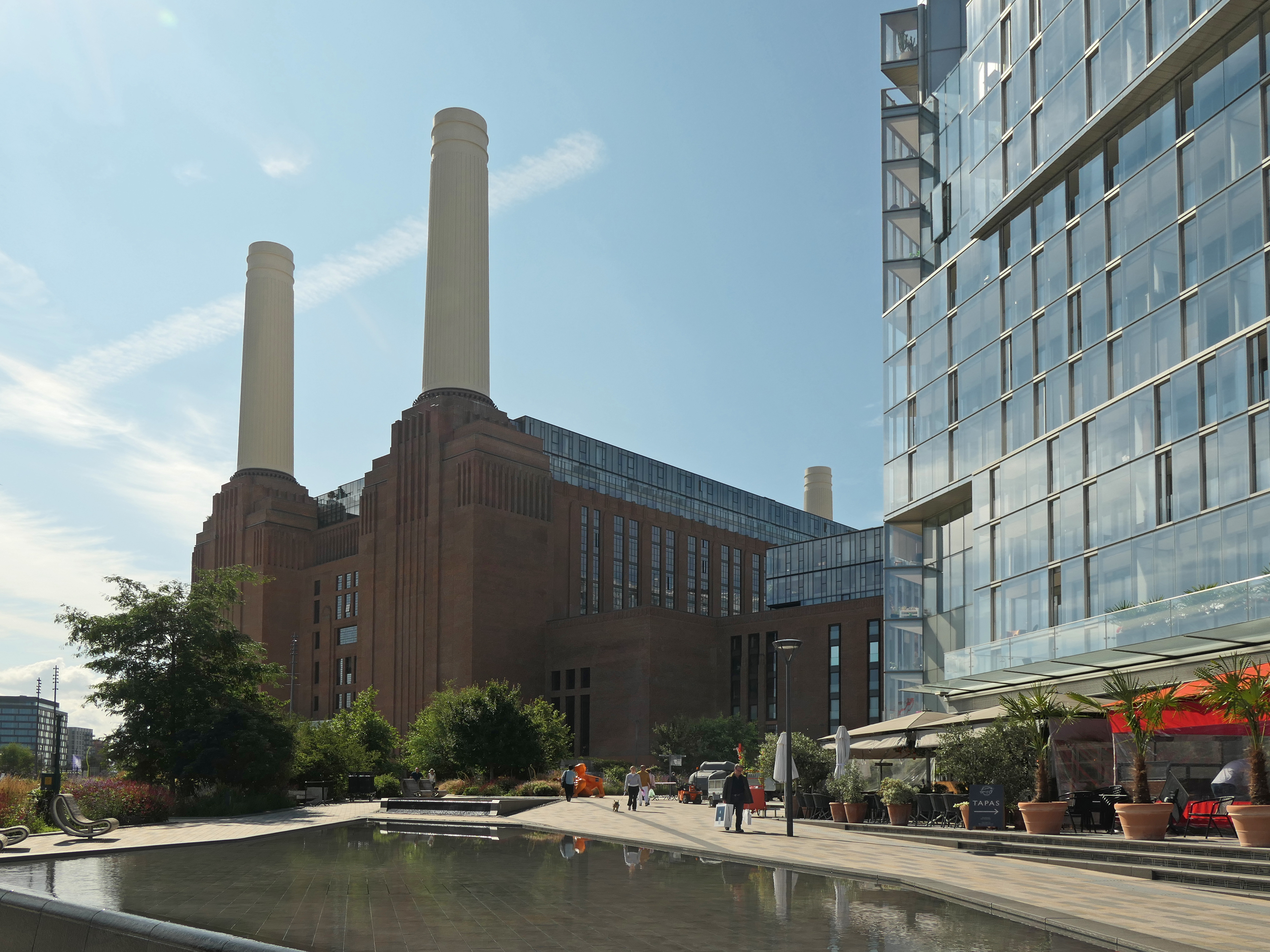
Apple Music Hall sits inside the redeveloped Battersea Power Station, the Art Deco former coal plant on the Thames that now houses shops, offices and Apple's own London campus. The venue itself holds 600 people, a deliberately small number for a company the size of Apple. According to details shared with press, the room combines a 38-foot-wide reconfigurable stage with a 48-speaker spatial audio system built into the walls and ceiling, designed so that both the audience in the room and listeners streaming remotely hear a mixed-in-the-round sound rather than a flat stereo feed piped to a webcast.
That distinction matters more than it sounds. Most "livestreamed concert" experiences online are simply a video feed of a normal stage show, mixed for the room and re-encoded for a browser. Apple's stated goal with the 48-speaker rig is closer to what it has already done with Dolby Atmos mixes on Apple Music: capture a live performance as an immersive spatial recording, not a flattened copy of it. Whether the livestreams actually deliver a spatial audio track to remote viewers, or a standard stereo mix, has not been detailed publicly and is worth watching once the first show airs.
The lineup, and what it signals
Elton John opens the venue on September 28. Baby Keem follows on October 2, and rising British artist Skye Newman plays October 7. Troye Sivan, Arlo Parks and Burna Boy are booked through the rest of October, with Chase & Status closing out November on the 26th and Charli XCX finishing the announced run on December 2. Tickets for the first three shows go on sale at 9am on September 28, the same day as the opening concert.
The booking spans arena-scale legacy names (Elton John), streaming-era rap (Baby Keem, Burna Boy), and much smaller emerging acts (Skye Newman), an unusual mix for a 600-capacity room. It suggests Apple is using ticket scarcity and artist prestige to generate press attention, while the free global livestream is the actual reach mechanism aimed at an audience many orders of magnitude larger than the room itself.
Why a streaming service needs a physical building
Apple Music has spent years releasing studio-produced live sessions under labels like Apple Music Live, typically filmed at existing venues or on soundstages. A dedicated, owned venue is a different commitment: real estate, permanent staff, technical infrastructure, and a recurring booking calendar, all for a service that competes directly with Spotify, YouTube Music and Amazon Music on subscriber numbers rather than on live events. None of Apple's direct streaming rivals currently operate an owned concert venue of this kind.
Apple has a precedent worth remembering here. Between 2007 and 2016, iTunes hosted the iTunes Festival, an annual month-long series of free concerts at London's Roundhouse in Camden, featuring major acts performing for iTunes customers who won tickets through a lottery. Apple quietly discontinued the festival after 2016 without public explanation, around the same time it was winding down iTunes as a standalone media platform in favor of Apple Music. Apple Music Hall differs from that earlier venture in one significant way: it is a fixed, year-round venue Apple appears to own or hold a long lease on inside its own Battersea campus, rather than a rented hall booked for a single annual event.
What this means for a subscriber, and what remains unclear
For an Apple Music subscriber, the practical takeaway is straightforward: the livestreams are described as free and global, meaning a subscription is not required to watch, at least for this opening run. That positions the venue as a marketing and retention tool rather than a paid perk, consistent with Apple's broader push to make Apple Music feel worth the subscription price after July's price increase on Apple Music and Apple One plans. Apple has not said whether Apple Music Hall shows will remain free indefinitely, whether a second venue is planned outside London, or how tickets beyond the first three shows will be distributed. The 600-seat cap also means in-person access will remain a rounding error compared to the streamed audience Apple is clearly building toward.