Europe's Largest Apple Museum Opens to the Public in Utrecht
An independent museum in Utrecht is now open with 2,000 square meters of Apple history, public ticketing, and a collection spanning 1976 to 2026.
Apple fans have a new destination in the Netherlands. The Apple Museum in Utrecht officially opened to the public on April 2 at Proostwetering 5d, in the Wall Utrecht complex, according to the museum's own site.
The museum says the venue covers 2,000 square meters and presents Apple products from 1976 to 2026. Coverage from 9to5Mac and MacRumors says the project was led by Ed Bindels with help from more than 50 volunteers, and describes it as Europe's largest Apple museum.
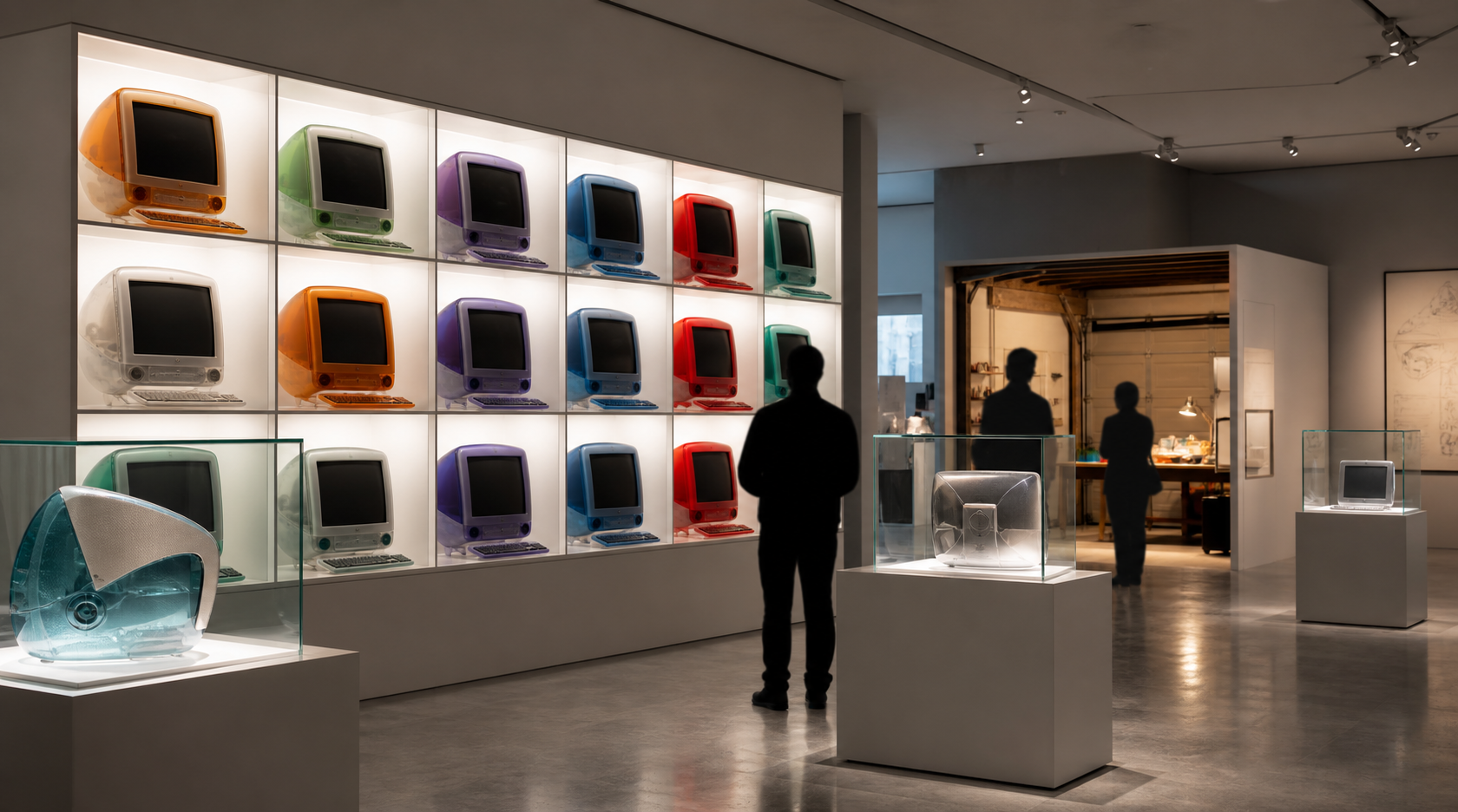
That last point matters: this is not an Apple-run institution. It is an independent museum built around private collecting, restoration, and public display. Reports highlight rooms of classic Macs, a rainbow wall of iMac G3 units, and a reconstructed garage scene inspired by Apple's earliest years.
The distinction is more than a legal footnote. Apple has never operated a public museum of its own products. Its corporate archive is not open to visitors, and the Apple Park Visitor Center in Cupertino is a retail and observation space rather than a curated history of the company. The practical consequence is that almost everything preserved from Apple's first fifty years sits in private hands, and whether the public ever sees it depends on collectors deciding to open their doors.
Utrecht is not the first attempt at that. Private Apple collections have been turned into ticketed exhibitions before, the best known being the Apple Museum in Prague, which billed itself as the largest private collection of Apple products. The pattern is familiar in computing history generally: material that institutional museums were slow to collect ended up with enthusiasts, and the earliest and rarest pieces — original Apple I boards above all — have increasingly become auction lots rather than exhibits.
A collection spanning 1976 to 2026 is also a preservation problem, which is where more than 50 volunteers stop sounding like a vanity statistic. Machines of that age fail in predictable ways: electrolytic capacitors dry out, backup batteries soldered to logic boards leak and eat the traces around them, CRT displays lose brightness and are dangerous to service, floppies and optical media degrade, and light-colored plastics yellow under ultraviolet exposure. Keeping several decades of hardware in displayable condition is closer to continuous restoration work than to storage.
The iMac G3 wall is the most photogenic room for a reason that has to do with design history rather than nostalgia. The 1998 iMac and the colors that followed it marked the moment the personal computer stopped being a beige box hidden under a desk and became an object people chose to look at. Lined up as a grid of translucent shells, the machines make that argument faster than any wall text could.
The reconstructed garage is a subtler exhibit, because it stages a story as much as a set of objects. The garage in Los Altos has become the founding image of Silicon Valley, and Wozniak himself has publicly pushed back on how much of the actual engineering happened there. Presenting it inside a museum invites visitors to consider how the company's early history has been told, which is a legitimate curatorial subject in its own right.
For anyone planning a visit, the schedule is the constraint worth noting. Wednesday to Sunday with last entry at 4 p.m. leaves a six-hour daily window and no Monday or Tuesday option, so a day trip has to be built around it. The address is a unit in the Wall Utrecht complex rather than a building in a city-center museum quarter, so it is worth mapping the route in advance; Utrecht itself is a straightforward train journey from Amsterdam and its airport.
Tickets are listed at EUR 21.50 for adults. The museum says it is open Wednesday through Sunday from 10 a.m. to 5 p.m., with last entry at 4 p.m. For readers already planning a trip, the practical takeaway is simple: the museum is open, bookable, and dedicated entirely to Apple's product history.
The open question is durability. Independent museums live on ticket revenue, volunteer hours, and the goodwill of the person whose collection anchors them, and the objects on display are appreciating faster than the admission price. Whether a privately assembled archive can keep growing and stay open is the part no opening-week coverage can answer — but for now, Europe has a permanent, ticketed place to see the hardware, which it did not have before April 2.