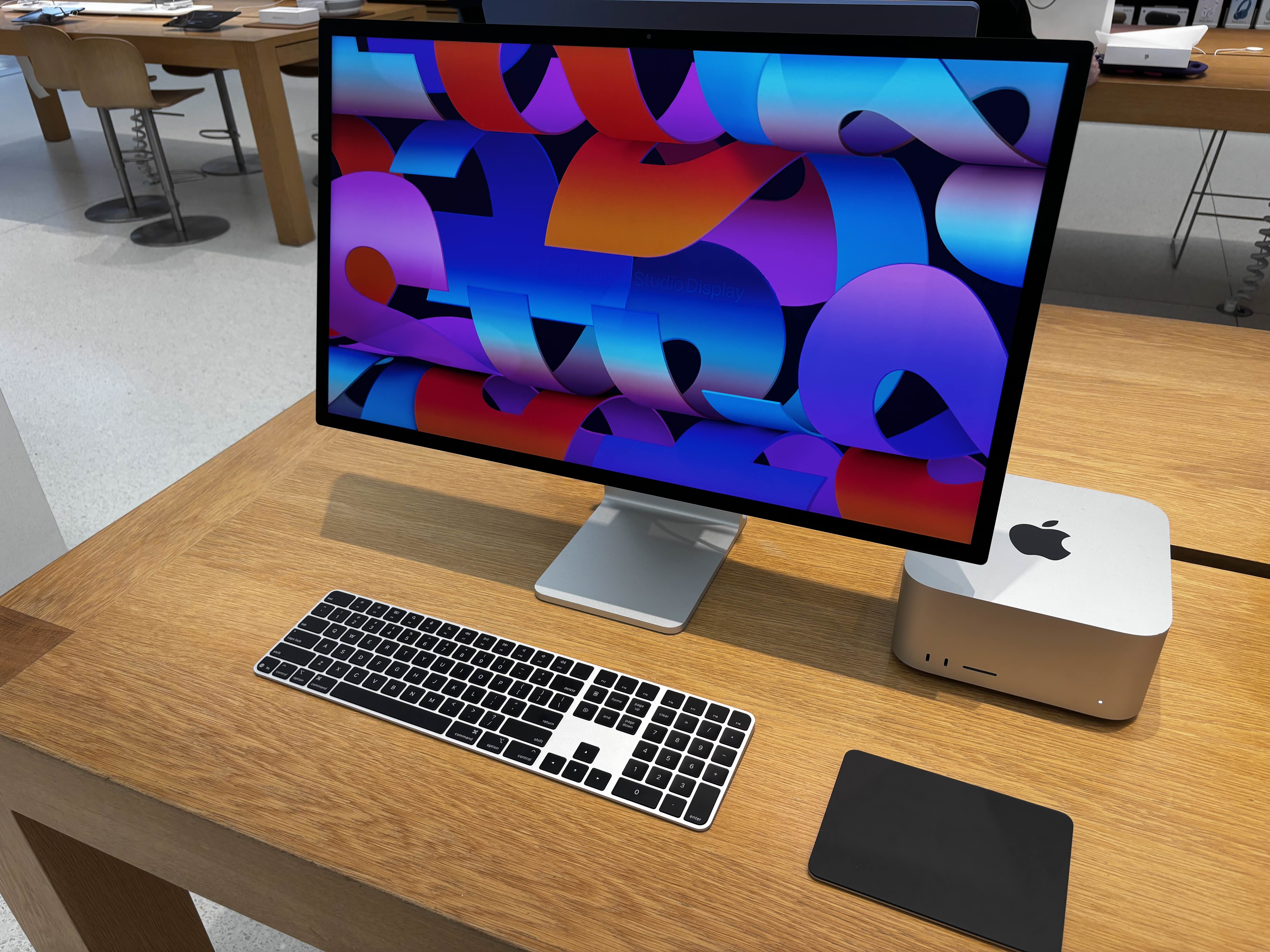
Jacek Halicki, CC0, Wikimedia Commons
Apple Shipped Macs in August Because Businesses Would Not Wait
Apple’s unusual August Mac mini and Mac Studio launch followed an unexpected surge in enterprise demand for local AI computing, according to The Information. The timing exposes both the appeal of unified memory and the limits of Apple’s enterprise readiness.
A launch that broke Apple's own calendar
Desktop Macs normally arrive in October or November, tucked into the quiet stretch after the iPhone cycle. Putting them out in late August does two things Apple usually avoids: it spends attention that would otherwise concentrate on the iPhone, and it starts the sales clock on a machine before the operating system it ships with has been finalised. The Information reports that the AI-driven boom in Mac Studio and Mac mini sales is what forced the calendar.
The launch itself was consistent with that reading. Apple gave unusual prominence to a capability with no consumer use at all: linking several Mac Studios together into a single system large enough to hold frontier AI models in memory. That is a data-centre argument made about a desktop computer, and it was made first.
What the machines actually offer
The refreshed Mac mini is offered with the M6 or the M5 Pro, and starts at $899 — a jump we covered when the machine was announced, in Apple's New Mac mini Starts at $899. The Mac Studio moves to M5 Max and M5 Ultra, with configurations reaching 512GB of unified memory at $5,499. Both are listed for release on September 22.
Unified memory is the whole story here. On a conventional workstation, an AI model has to fit inside the graphics card's dedicated memory, and consumer cards top out well below 100GB. On Apple silicon the processor and the graphics units share one pool, so a 512GB Mac Studio can hold a model that would otherwise require several enterprise accelerators and the power supply to match. For a company that wants to run a large model on its own premises, rather than sending its data to somebody else's cloud, that arithmetic is unusually attractive.
The organisation behind the product was not ready
The Information reports that Apple had no engineering team dedicated to business customers, no staff assigned to developer relations for them, and no enterprise AI strategy — this while the Mac mini was, by the same account, the star of a June "Business at the Park" event attended by executives from Ford, Disney and Anthropic. Companies that asked to buy access to Apple's Private Cloud Compute infrastructure were turned away, and Apple has instead pointed them toward partners such as WebAI and Mount Thor, which build AI tooling on top of Apple hardware.
That refusal is not a slip. Private Cloud Compute was designed around a promise that Apple itself cannot read what passes through it, verified by publishing the server images for inspection. Renting that capacity out as ordinary compute would mean either breaking the architecture or maintaining a second, less private one alongside it. Apple has chosen, for now, to sell the boxes and let others build the services.
A demand spike arriving during a memory shortage
The timing is the worst possible. The same global memory shortage that has been pushing up prices across Apple's line — including, reportedly, the iPhone — has left many high-end Mac mini and Mac Studio configurations out of stock for months. Demand and scarcity are hitting the identical component: a Mac's appeal for AI work is the size of its memory pool, and memory is precisely what cannot be obtained.
The Information notes that some corporate buyers have moved to Nvidia's DGX Spark, a compact AI desktop launched late last year in a form factor close to the Mac mini's. That is the part Apple should find uncomfortable. Losing a sale on price is ordinary; losing it because the product exists on a slide and not on a pallet is a supply failure, and the customer who solves the problem with someone else's hardware writes the next three years of software against that hardware.
What a buyer should take from this
If you are specifying Macs for AI work this autumn, three things follow. Order the memory you will need in eighteen months, because configurations cannot be upgraded after purchase and the shortage makes a later second machine an expensive fix. Expect lead times rather than shelf availability on the top configurations. And treat the clustering capability as a direction of travel rather than a finished product: Apple has demonstrated it, but the tooling and support structure around it are, on The Information's account, still being assembled — partly by companies that are not Apple.
Apple has spent a decade telling investors that the Mac is a healthy, steady business. It has just been handed a reason for that business to grow much faster, arriving in a form the company did not design for and cannot fully supply. The interesting question is not whether Apple noticed. It is whether the answer is a proper enterprise organisation, or a continued preference for selling hardware and letting the ecosystem do the rest.