Washington Put a Date on Apple's Memory Problem. It Is August 21.
Apple spent the summer trying to buy memory chips from two Chinese manufacturers that Washington would rather it left alone. The Commerce Secretary has now said so in front of cameras, and six senators have attached a deadline to the question.
Apple spent the summer trying to buy memory chips from two Chinese manufacturers that Washington would rather it left alone. The Commerce Secretary has now said so in front of cameras, and six senators have attached a deadline to the question.
On Friday, after touring Apple's new Advanced Manufacturing Center in Houston, Commerce Secretary Howard Lutnick told reporters that "the Trump administration is not in favor" of Apple buying Chinese memory. The remarks were first reported by the Wall Street Journal. Asked whether that message had been delivered to Apple directly, Lutnick answered with one word: "Plainly." He added that there had to be other ways of solving the problem, and that "it's not great American companies using Chinese memory."
None of that is a regulation. No rule was rewritten, no licence was pulled, no shipment was blocked. What changed is that the cabinet member who oversees export controls stated a position in public, next to an Apple facility built to showcase American manufacturing. In Washington, that is usually the step before a rule rather than a substitute for one.
Separately, a bipartisan group of six senators — led by Indiana Republican Jim Banks and New York Democrat Chuck Schumer, and joined by Democrats Andy Kim and Jeanne Shaheen and Republicans Mike Crapo and Pete Ricketts — has asked Apple to commit, by August 21, to ruling the two suppliers out entirely. Apple has not said publicly what it intends to answer.
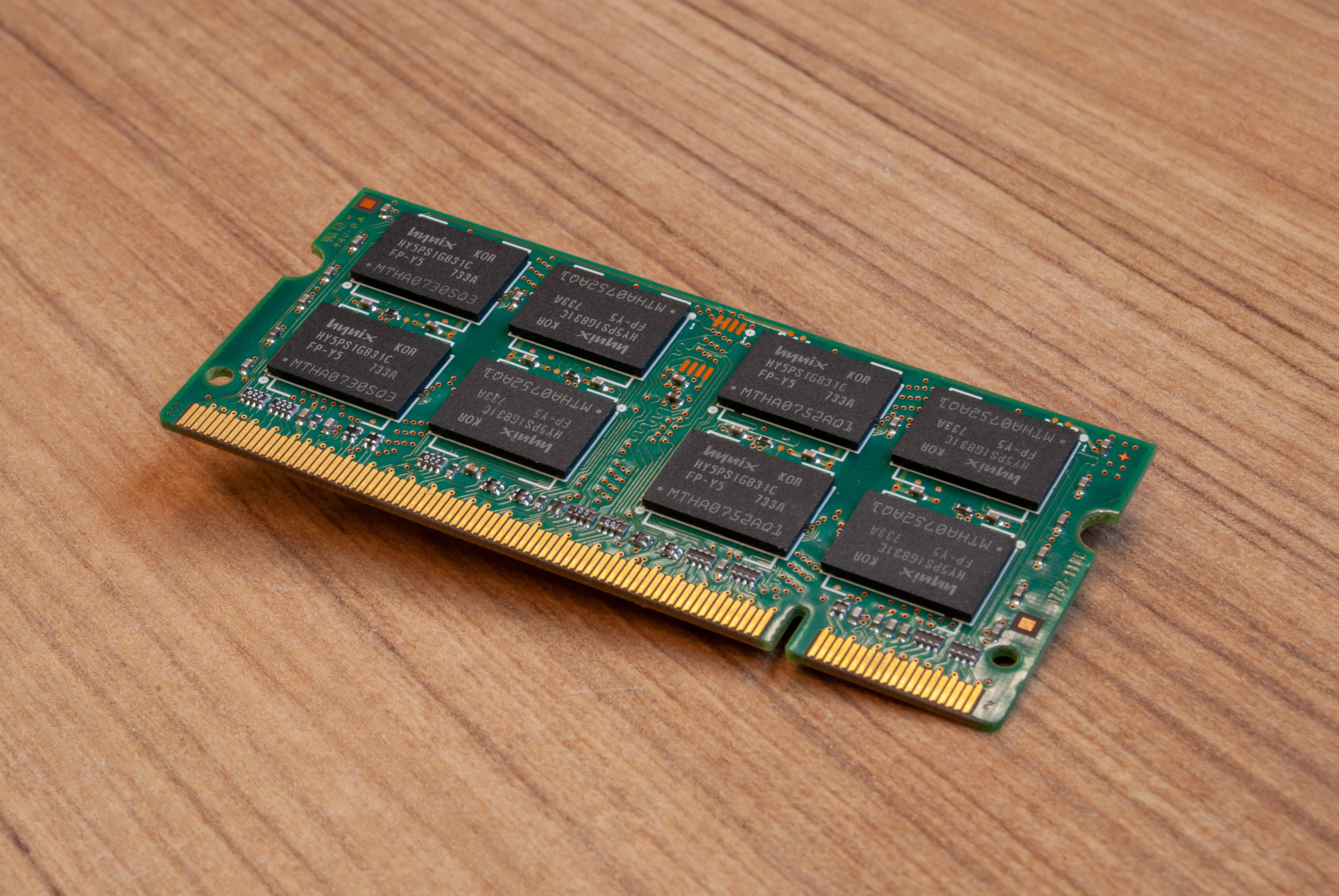
The suppliers are ChangXin Memory Technologies, known as CXMT, which produces DRAM — the working memory in a Mac — and Yangtze Memory Technologies, or YMTC, which produces NAND flash, the storage. Both appear on the Pentagon's 1260H list, the register of firms the Defense Department believes support China's military. YMTC additionally faces Commerce Department restrictions on controlled technology transfers.
It is worth being precise about what the 1260H list does, because it is often described as a ban and is not one. It does not make it illegal for Apple to buy DRAM from CXMT. What it does is contaminate everything downstream. The Defense Department cannot contract with a listed company, and it cannot buy from a third party whose product contains that company's components. A Mac with CXMT memory inside would become an awkward line item in federal procurement — not forbidden to consumers, simply unsellable to one of the largest institutional buyers in the country.
The bigger exposure is a list Apple has not landed on yet. Washington has discussed moving CXMT to the Entity List, which would cut off trade altogether. Qualifying a new memory supplier is not a purchase order; it is roughly a year of electrical validation, thermal testing and firmware work across product lines. Apple could complete all of it and lose the supply line to a single administrative decision — and be back where it started, with the shortage unchanged and the calendar a year shorter.
The reason is the one already visible in Apple's price list. Memory has become the most inflationary component in consumer electronics, because AI datacentre construction is consuming DRAM and high-bandwidth memory faster than fabs can add capacity, and because the three companies that dominate the market — Samsung, SK Hynix and Micron — have been reallocating capacity toward the customers paying the most per wafer. Consumer laptops are not those customers.
Apple has already passed part of that through. We covered the immediate effect earlier this month in Apple raised the MacBook Air's price by $200, and still can't keep up: the increase did not buy back availability, because the constraint is upstream of pricing. A fourth qualified DRAM source would, on paper, loosen that constraint. Apple formally asked the administration in late June to allow purchases from CXMT, and has since obtained chips and tested them.
Here the commercial logic weakens. CXMT has refused Apple's request for a discount, and wants to be paid roughly what Apple pays Samsung. If the Chinese supplier costs the same as the Korean one, the immediate saving Apple was chasing largely disappears.
That is worth sitting with, because it changes what this dispute is actually about. If the price is the same, the value of CXMT to Apple is not this year's invoice — it is the existence of a credible fourth bidder in every future negotiation with Samsung, SK Hynix and Micron. Which is also, precisely, what those three suppliers do not want, and why Micron lobbied the White House in July against granting Apple permission, arguing the move would damage American memory manufacturing the way earlier Chinese entries damaged American steel.
Reporting on August 10 indicated that HP and Acer already use CXMT memory in hardware sold outside the United States, apparently without penalty. Apple, which asked first, is the one being publicly told no. It is difficult to argue that a policy applied to the largest and most visible company but not to its competitors improves American supply-chain security; it does reliably improve headlines.
Apple's position is unusually exposed here. It manufactures at scale in China, sells heavily there, and has spent two years building visible American capacity — the Houston centre Lutnick was touring is part of that campaign. Every concession it makes on sourcing is read in Beijing as well as in Washington, which is the same bind we described when Apple built a separate AI model for China.
Practically, nothing about a Mac already bought changes. For anyone buying this autumn, the useful expectation is that memory stays expensive and that Apple's storage and RAM upgrade tiers stay expensive with it. If you are choosing a configuration, the case for buying more memory than you need today is stronger than usual, because Apple solders it and the component driving the price is not getting cheaper on any timeline anyone has published.
The date to watch is August 21. Apple can commit, decline to commit, or say nothing — and given that its September event is expected on the 9th, saying nothing has an obvious appeal.