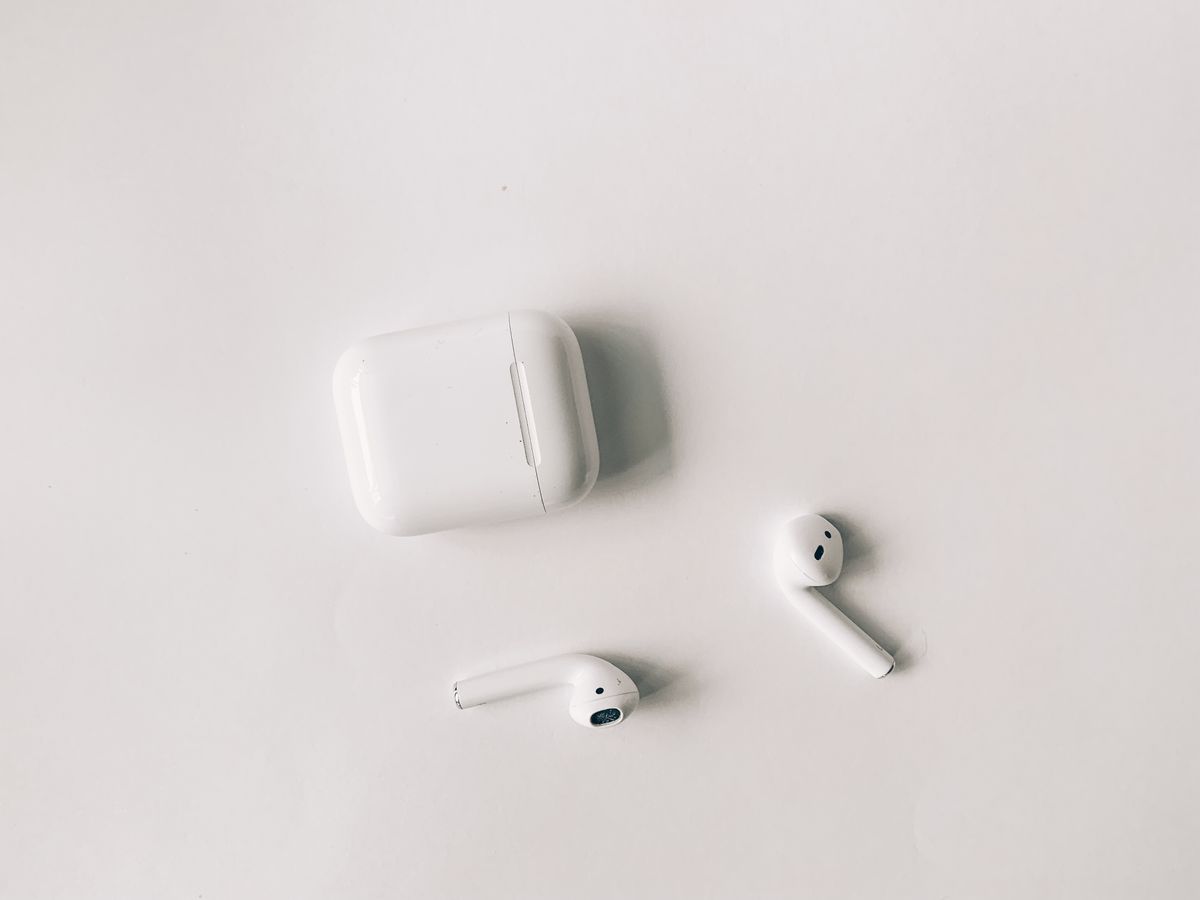
Apple's Camera AirPods Could Arrive Next Month — as Eyes for Siri
Apple has been building camera-equipped AirPods for years without shipping them. According to Bloomberg's Mark Gurman, a version of that product is now on the internal road map for this year — which would put it on stage in September.
For once, the interesting AirPods rumour has nothing to do with sound.
In his Power On newsletter on August 2, Bloomberg's Mark Gurman wrote that Apple has been planning to release AirPods fitted with cameras as early as this year. If that timing holds, the earbuds would be unveiled next month alongside the iPhone 18 Pro, the iPhone 18 Pro Max and Apple's first foldable — a keynote already crowded enough without adding an entirely new category of sensor to the line-up.
Cameras that are not meant to take photographs
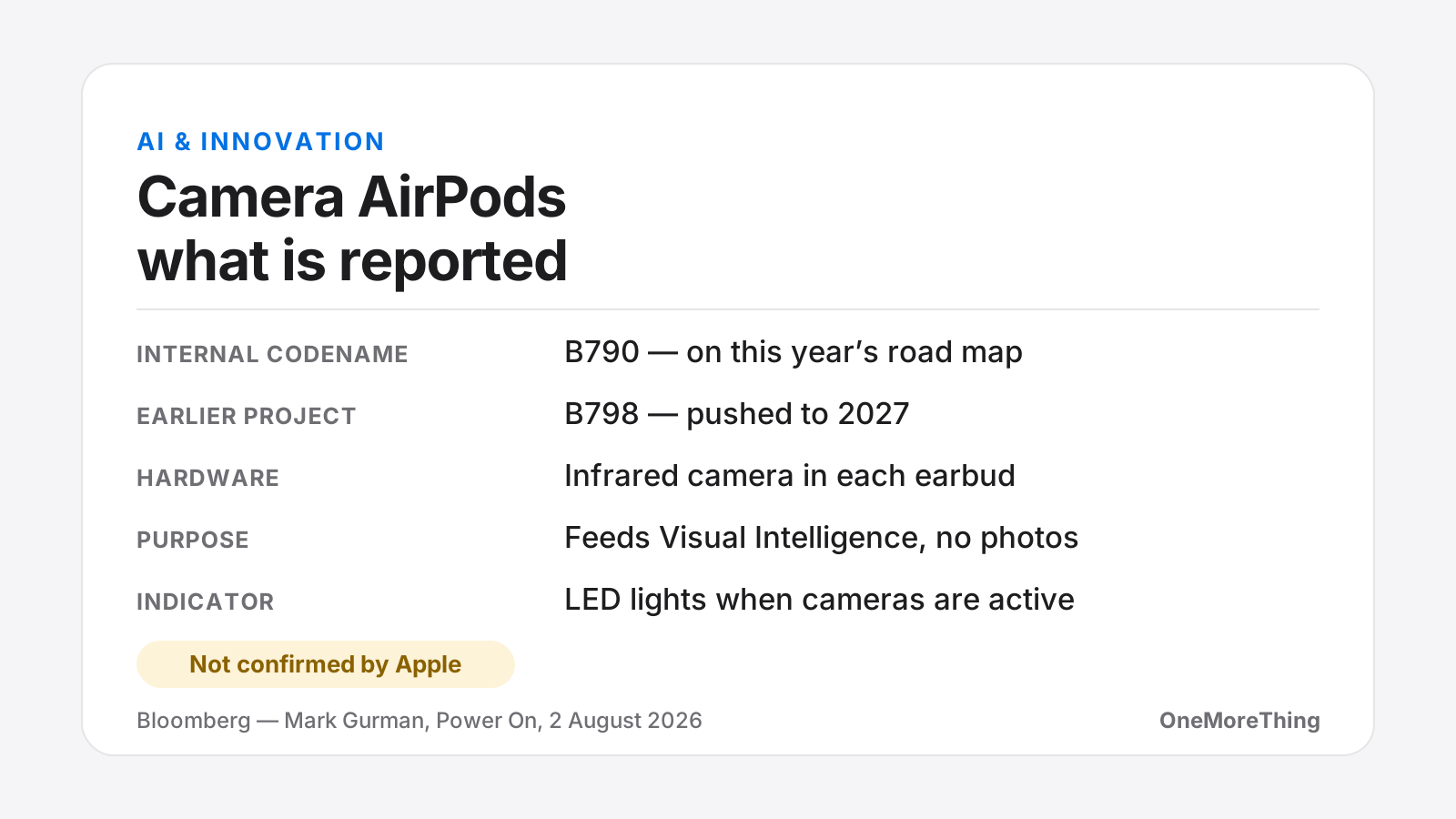
The hardware concept is easy to describe and considerably harder to execute. Tiny infrared cameras would sit in both the left and the right earbud, pointing outward from either side of the wearer's head. They are not there to capture images you would ever look at. They are there to feed Visual Intelligence, the feature that already lets an iPhone 15 Pro or newer identify whatever its camera is aimed at.
The difference is that you would no longer need to take the phone out of your pocket. A small LED on the earbuds would indicate when the cameras are active — a detail that matters more than it might appear, and one we will come back to.
Gurman's example is deliberately mundane. You are standing in front of a countertop covered in ingredients, and you ask Siri what to make for dinner. No pointing, no framing, no unlocking anything.
What Visual Intelligence already does — and where it stops
It helps to know what the feature being extended actually is. Visual Intelligence arrived with Apple Intelligence and runs on the iPhone 15 Pro and every model since. Point the camera at something and it will attempt to tell you what it is: identify a plant or a breed of dog, pull a date off a poster and offer to put it in the calendar, translate a menu, recognise a storefront, or hand the image to a search engine when it cannot answer on its own. In iOS 27 it also gains a dedicated Siri mode inside the Camera app.
Its limitation has always been ergonomic rather than technical. Using it requires the deliberate act of taking out a phone, waking it and aiming it — perfectly reasonable for a restaurant menu, and faintly absurd for the dozen small questions a person actually accumulates while walking down a street. Most of the moments where a visual answer would genuinely help are moments in which nobody is going to reach for a phone.
That gap is precisely what an earbud-mounted camera would close, and it explains why Apple would bother fitting sensors into something as space-constrained as an AirPod. The feature does not need to become cleverer. It needs to become available without ceremony.
The strongest evidence sits in Apple's own code
Rumours about camera AirPods have circulated for years without producing hardware, which is why the most persuasive element of this story is not the reporting but the software.
Code found in the second iOS 27 developer beta refers to a product codenamed B790, described as capable of relaying "two images from cameras on either side of a user's head." That is an unusually specific string to find in a shipping beta. The same code suggests the feature would work with landmarks, text and known objects, with the Eiffel Tower and a coffee mug cited as test cases — the kind of placeholder examples engineers use when a feature is being wired up rather than theorised about.
Gurman has since confirmed that B790 refers to a version of the camera AirPods. And here the story becomes genuinely odd.
Two codenames, one idea
Apple has been working on camera AirPods for years under a different codename, B798. That project was first scheduled for 2026, then pushed to 2027. B790 appears to be a parallel effort — Apple has never lost the habit of running competing internal versions of the same product against each other — and it seems to be further along than the original.
Whether B798 ever ships is now an open question. What the split tells us is that Apple did not simply delay the idea; it kept at least two teams pursuing it, and one of them arrived somewhere the other did not.
AirPods have been quietly turning into sensors for years
It is tempting to read camera AirPods as a sudden lurch into wearable computing. The trajectory is older and slower than that.
The AirPods line has spent several generations acquiring capabilities that have nothing to do with playing music. Apple's H2 chip brought on-device processing headroom. Hearing-health features turned AirPods Pro into a clinically relevant device rather than an accessory. Live translation turned them into an input surface for language. Apple's fitness earbuds have picked up heart-rate sensing. Each of those additions moved the product a little further from "speaker you wear" and a little closer to "sensor you wear."
Cameras are the logical end point of that drift. An earbud already sits in a stable position, at head height, pointing where you point — which is precisely what a computer-vision system wants and precisely what a phone in a pocket cannot offer.
The competitive context matters too. Meta has been shipping camera-equipped Ray-Ban glasses for several years and has made them the centre of its consumer AI story. Apple's own smart glasses, by contrast, are reported to be on a WWDC 2027 path at the earliest. If camera AirPods arrive first, they would become Apple's initial mainstream wearable camera — and the product on which the company discovers how the public actually reacts to being around one.
The privacy problem Apple has to solve before the product ships
Which brings us back to that small LED.
A camera at ear level is, by definition, usually pointed at whoever you are talking to. Apple has handled this before: every Mac webcam has a green light wired so that the camera cannot be powered without it. The indicator is not a software courtesy, it is a hardware guarantee, and it exists because Apple concluded years ago that a camera nobody can see is a camera nobody will trust.
The same logic applies with more force here, and the engineering problem is harder. A laptop lid faces one person. Earbuds face a room. Apple will need to make the distinction between a device that sees and a device that records not merely technically true but immediately legible to strangers who never agreed to anything. Infrared sensors that never produce a viewable photograph help that argument considerably — but only if Apple explains it clearly, and only if regulators, particularly in the EU, accept the explanation.
What could still slip
Quite a lot. This is a product that has already moved once, from 2026 to 2027, before a second version appeared to overtake it. September's keynote is already carrying the iPhone 18 Pro, the iPhone 18 Pro Max and a first foldable, which is an unusual amount of risk for one stage. And Apple's recent record on shipping announced AI features on schedule is, to put it gently, mixed.
The price is a complete unknown. Gurman has previously suggested Apple is weighing "AirPods Ultra" branding, on the reasonable assumption that a product with cameras will cost more than the $249 AirPods Pro 3. Two other "Ultra" products are rumoured for the same period — a MacBook Ultra with an OLED display and a foldable iPhone Ultra — which would at least make the naming coherent.