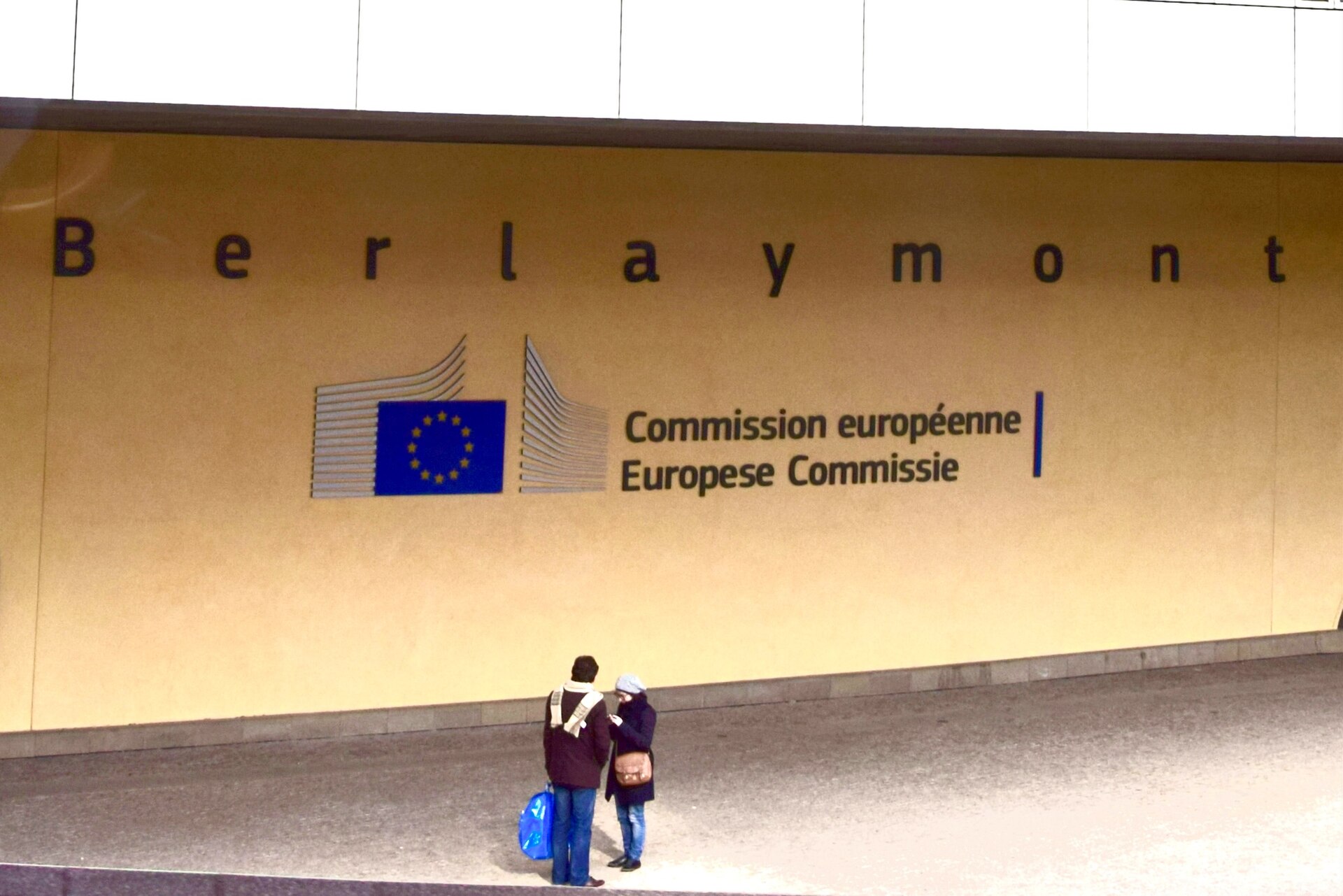
Ank Kumar / Infosys Limited, CC BY-SA 4.0
Brussels Welcomes Apple's New App Store Terms. Only Epic Objects
The new terms take effect on 1 October and replace a structure that even Apple's own developer documentation struggled to explain. Four situations now cover almost everything.
The numbers, in plain terms
The new terms take effect on 1 October and replace a structure that even Apple's own developer documentation struggled to explain. Four situations now cover almost everything.
An app on the App Store using Apple's In-App Purchase pays 26 percent, dropping to 15 percent for the Small Business Program, the Mini Apps and Video Partner Programs, and for auto-renewing subscriptions after their first year. An app on the App Store using its own payment processor pays 20 percent, or 10 percent under those same programs. An app that sends the customer to the web to pay owes 15 percent, or 10 percent under the programs. And an app distributed entirely outside the App Store — through an alternative marketplace or straight from the web — pays a 5 percent Core Technology Commission.
Two charges disappear outright: the initial acquisition fee and the store services fee. So does the Core Technology Fee, which is the change developers have been waiting for.
Why killing the Core Technology Fee matters
The Core Technology Fee was a fixed charge per installation, levied above a high volume threshold, on developers distributing under the European alternative terms. Apple describes it as a per-install fee for developers that reach extraordinary scale. Its defect was structural rather than arithmetic: it was owed on downloads, not on sales. A free app that went viral could generate an invoice with no revenue behind it, and a developer could not predict the bill without predicting a hit.
The replacement, a 5 percent Core Technology Commission, is charged on digital transactions instead. That converts a fixed and unbounded liability into a percentage of money actually received. For a small studio deciding whether to try an alternative marketplace, the difference is not a discount — it is the removal of a risk that made the experiment unmodellable.
What the Commission actually said
The European Commission's response, given to Bloomberg and reported by the Irish Independent, is short and carefully worded. It welcomes Apple's changes, notes that they follow "a close dialogue" after the April 2025 non-compliance decision on steering and the preliminary findings on alternative distribution, and adds that the Commission "will monitor Apple's effective implementation of the new terms."
That last clause is not decoration. Welcoming a set of terms is not the same as closing a file, and the Commission's own statement restates the standard it will measure against: under the DMA, it says, users in the EU "have a right to full and effective choice of alternative app distribution channels." What has changed is the direction of travel: Brussels spent 2024 and 2025 rejecting Apple's proposals, and has now stopped.
The child-safety provisions in the same announcement
The same announcement carries a set of rules that will shape how European families experience apps. Apps in the Kids category may not link out to a website to complete a transaction at all. For users under eighteen, any App Store app using alternative payment or an external link must present a parental gate before a purchase. For users under thirteen, linking out for transactions is prohibited outright. Where a member state requires parental consent above the age of thirteen, Apple says the protections scale accordingly.
They are the quiet counterweight to opening up payments. Every external link is a page Apple does not host and cannot moderate, and a child on an unfamiliar checkout page is the obvious failure mode. How well the gate works will only be measurable once the terms take effect.
Who is allowed to run a store now
Apple has also widened who may operate an alternative marketplace or distribute from the web. An applicant now qualifies by meeting a moderate financial-stability score from Dun & Bradstreet, or by being publicly traded or owned by a public company, or by having taken venture funding from an established firm, or by having completed an audit by a licensed accountant, or by being a government body, school or nonprofit.
Any one of those routes is enough, which is a real loosening. The previous requirements were widely read as excluding exactly the small independent operators that alternative distribution was supposed to enable. Notarisation, Apple's technical review of every app distributed through an alternative channel, remains mandatory — a point Apple defends by noting that web distribution has no marketplace operator watching over it.
Epic, alone, says no
Epic Games responded that the law requires Apple to permit web link-outs "free of charge" and that the new terms "deliberately violate the Digital Markets Act." Epic's position has been consistent for six years: any commission above zero on a payment Apple does not process is illegitimate. It is a coherent principle, and it is not the one the Commission appears to have adopted.
The contrast with the United States is instructive. In the American proceeding, Apple has proposed a comparable three-tier link-out schedule — 15, 10 and 5 percent, as we detailed on 13 August — but there the number is being set by a judge after a contempt finding, not agreed with a regulator. Apple is also awaiting a Supreme Court decision in October on the commission element of the Epic case.
What it means if you are a developer
Three practical points. The rates apply from 1 October, so pricing decisions taken in September should assume them. Developers may now offer Apple's In-App Purchase alongside an alternative option, in-app or by link, provided they follow Apple's "presentation requirements" and keep their chosen configuration for twelve months — that commitment period is the detail most likely to be overlooked. And if you serve users under eighteen, the parental gate is not optional and will need building before the deadline.
Sources
- Apple announces changes for apps in the European Union — Apple Newsroom, 18 August 2026
- Apple overhauls App Store fees in the EU with new unified terms — 9to5Mac, 18 August 2026
- European Commission approves of Apple's new App Store terms even if Epic doesn't — AppleInsider, 19 August 2026
- Apple's EU App Store changes are big, a preview of what's coming in US — AppleInsider, 18 August 2026
- Apple will change its App Store rules to end its dispute with the EU — Irish Independent